Architectural Wonders – Frozen Chapters of Ritual and Music
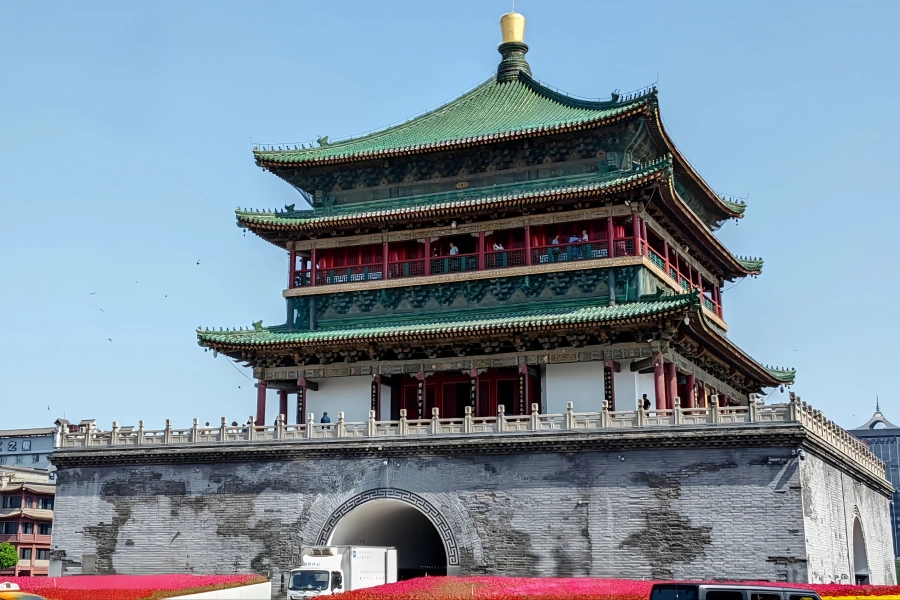
The clock tower itself is a huge cultural relic, and every detail is worth appreciating.
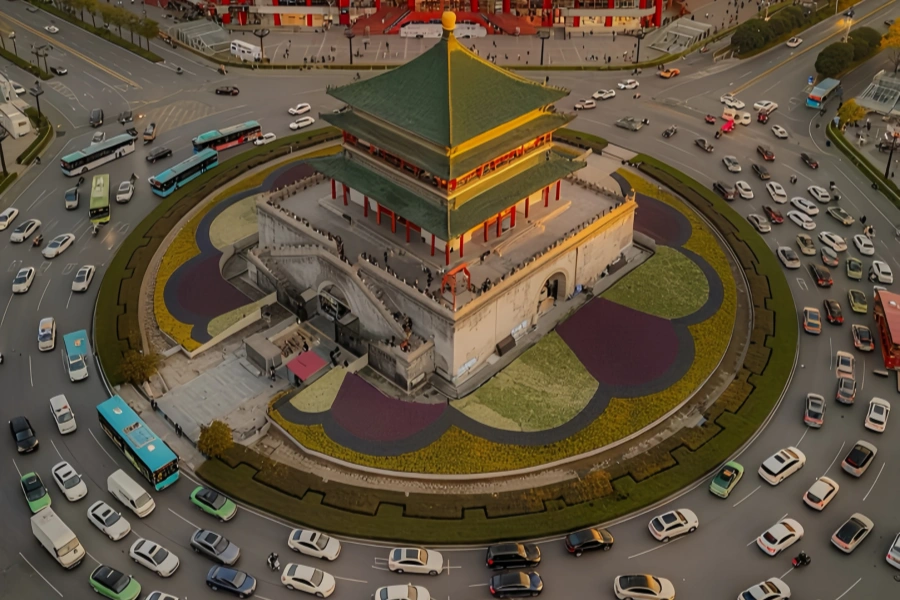
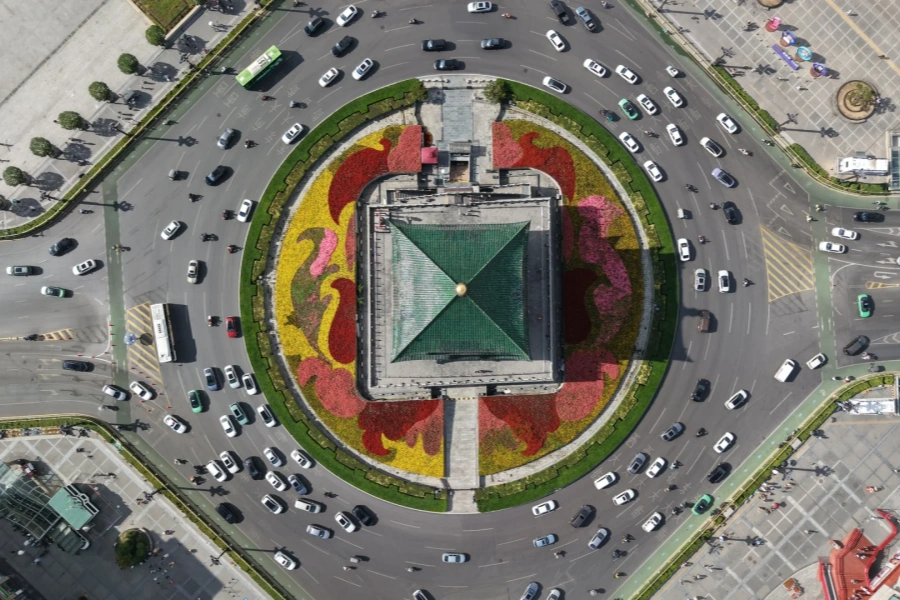
The archway at the base and the crossroads: Standing beside the bustling roundabout, one can see how the four giant archways frame the vibrant scenes of the four main streets from the east, west, south, and north, like a picture frame. This is an excellent vantage point to experience the ancient city's planning concept of "hundreds and thousands of houses like a chessboard, twelve streets like vegetable plots."
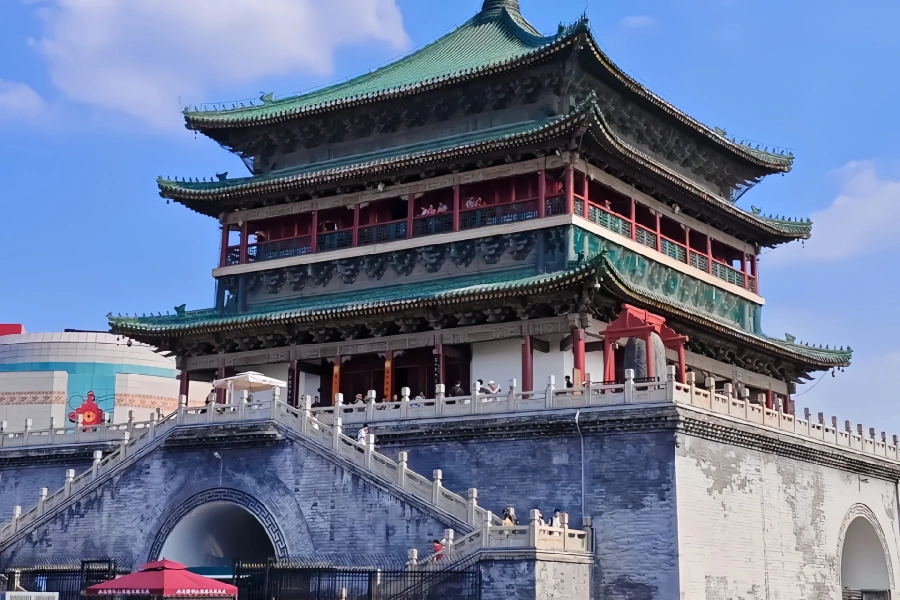
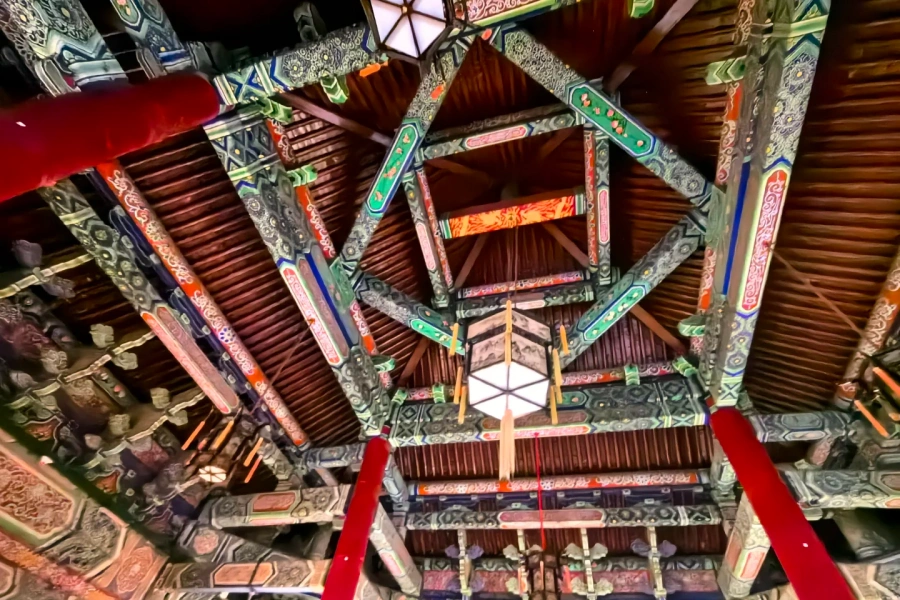
Interior coffered ceiling and painted decorations: Upon ascending to the second-floor hall, be sure to look up. The ceiling features a traditional Chinese gilded relief coffered ceiling, intricate and magnificent, shimmering with light. The surrounding beams and rafters retain Ming Dynasty-style painted patterns, which, although restored, still retain their ancient charm, depicting legendary stories and splendid patterns from the Tang Dynasty.
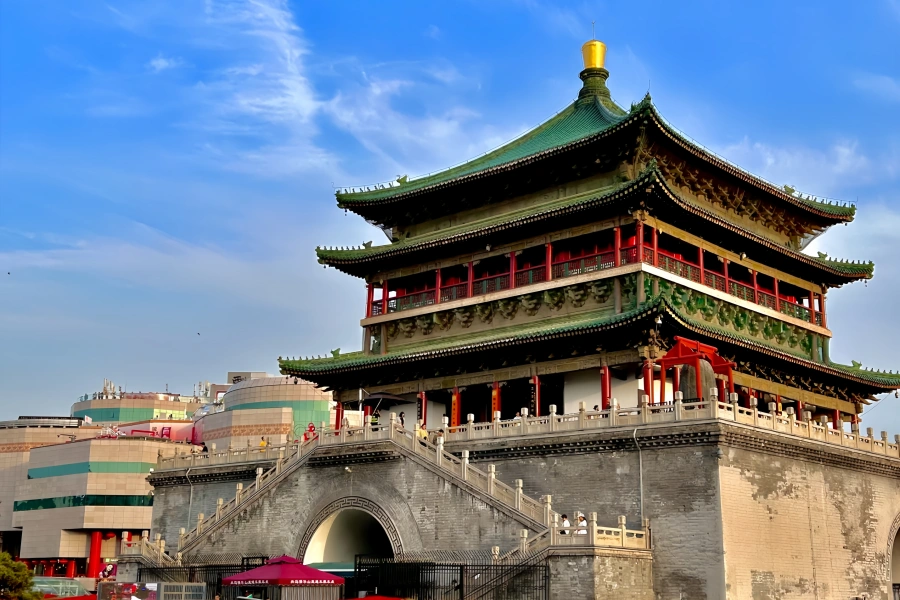
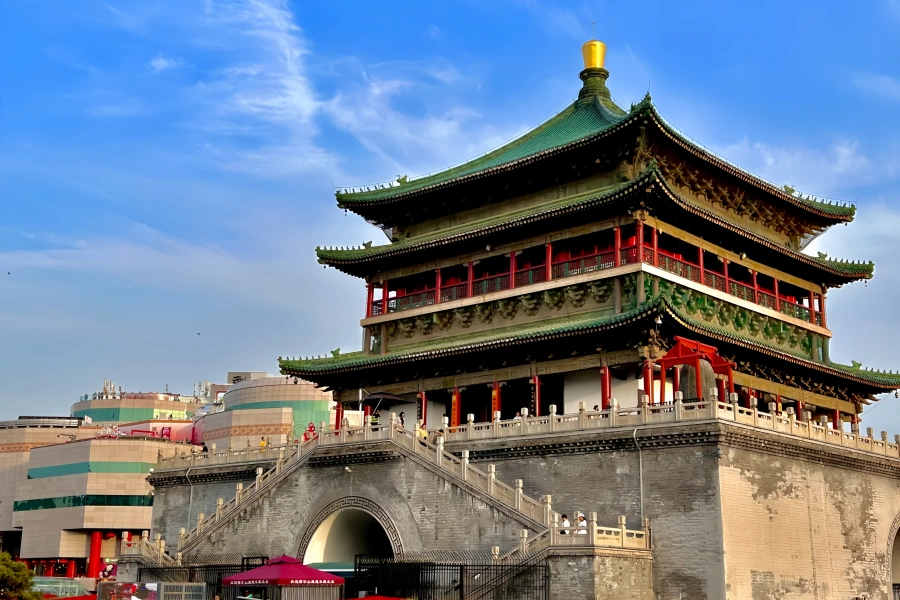
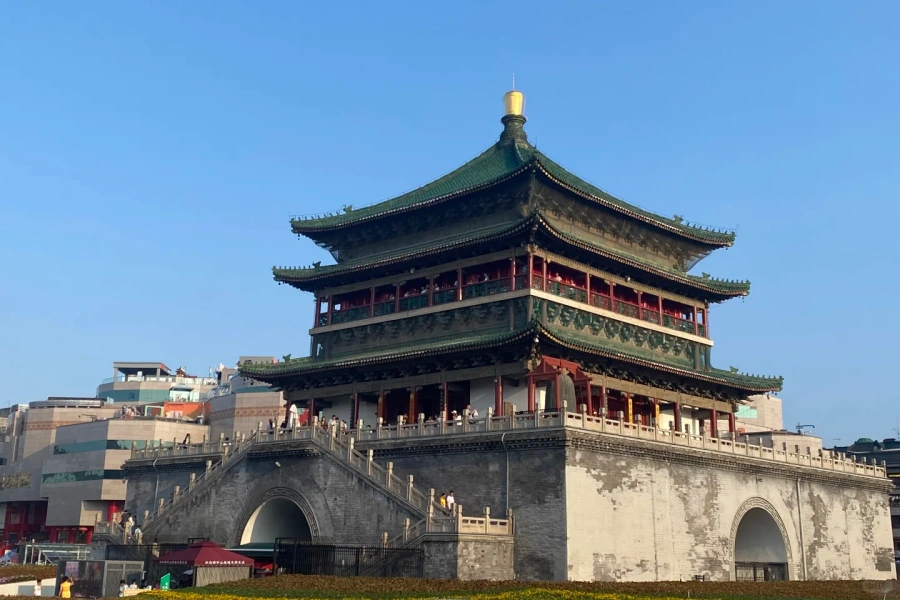
Double-eaved brackets and gilded finial: From the outside, the building has two stories and three eaves, supported by brackets extending beyond the eaves on all four sides, layered like clouds, which is not only beautiful but also a manifestation of mechanical wisdom. Looking up at the gilded finial pointing straight to the sky, it is the finishing touch that connects the bell tower, as a "city in the sky," to the spirit of heaven and earth.
Humanistic Imprints – Vibrant Echoes of Time
The cultural value of the clock tower lies in the fact that it has always been the "protagonist" of urban public life throughout history.
The Legend of Jingyun Bell: The original bell hanging in the bell tower was the Jingyun Bell, known as the "Number One Bell Under Heaven," cast during the Jingyun era of Emperor Ruizong of Tang (711 AD). The inscription on the bell was personally written by Emperor Ruizong. Its precise pitch and resonant sound were used for the "ringing of the bell to pray for blessings" on New Year's Eve. Today, the original bell is preserved in the Xi'an Stele Forest Museum, and its sound is still used in the CCTV Spring Festival Gala every year. The bell currently hanging in the bell tower is a replica, but the legend and its echoes continue.
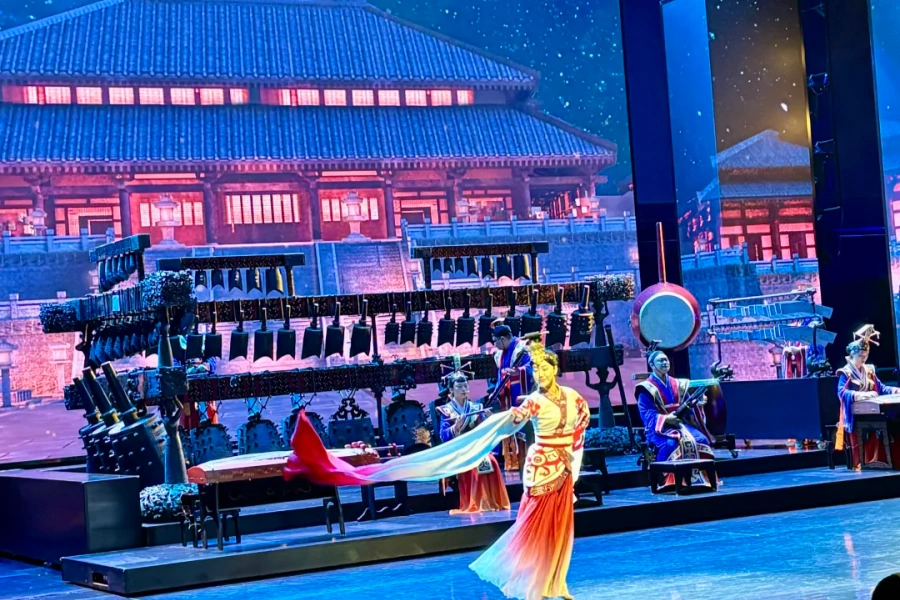
The revitalization of chime bell music and dance: Today, there are regular performances of ancient-style chime bell music and dance on the second floor of the bell tower. When ancient music such as "Spring River Flower Moon Night" and "Rainbow Feather Dress Dance" plays, musicians dressed in Tang Dynasty costumes strike the chime bells, instantly transporting people back to the magnificent feast of the Tang Dynasty court. This is the most moving combination of silent architecture and flowing music.
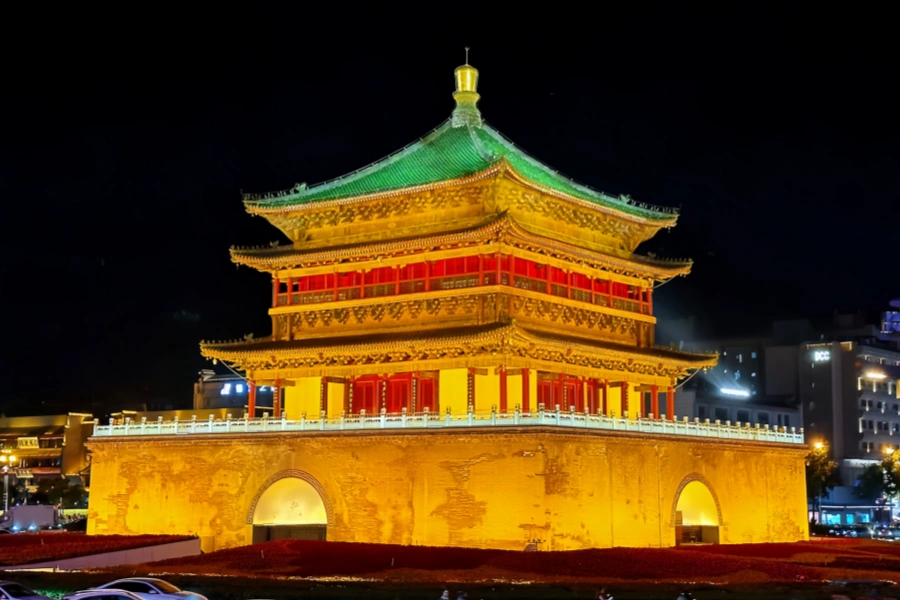
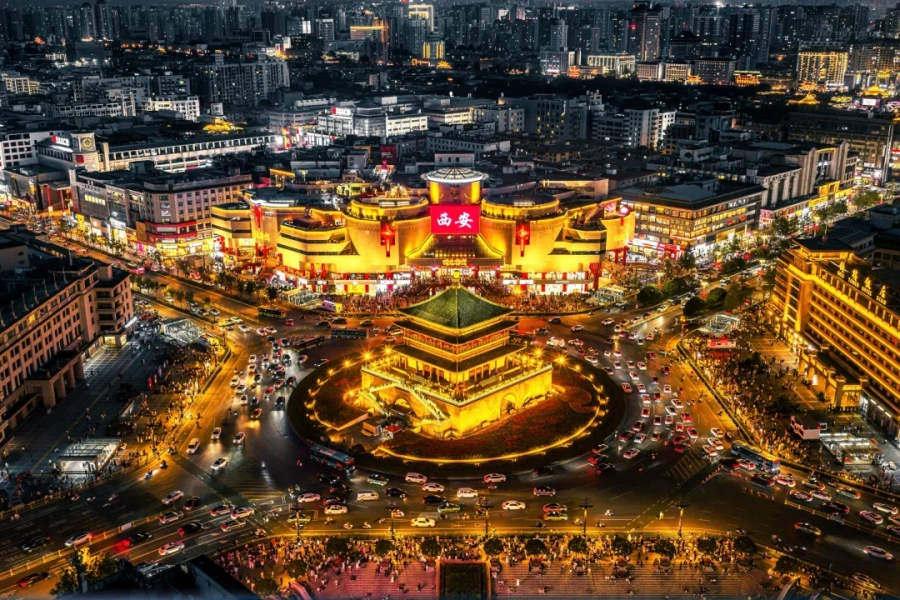
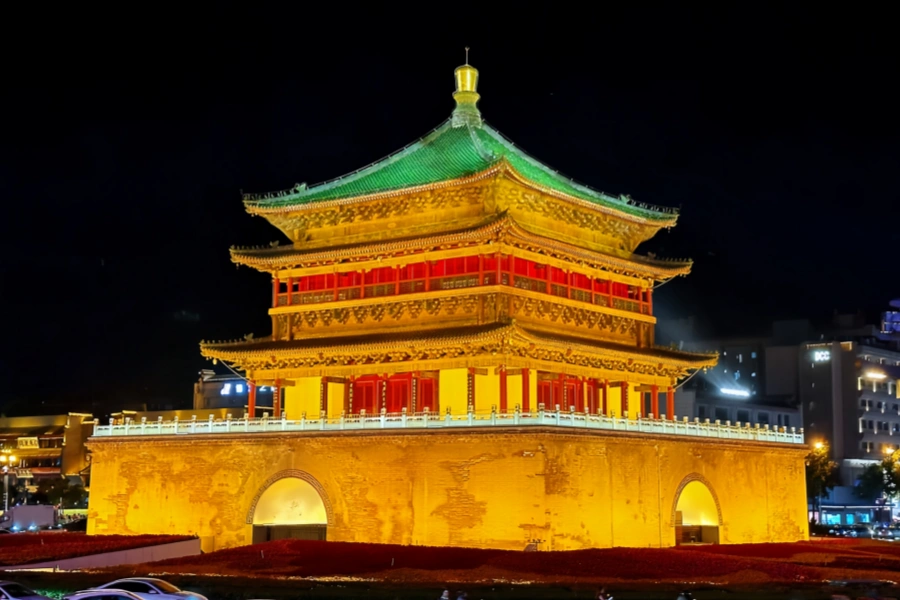
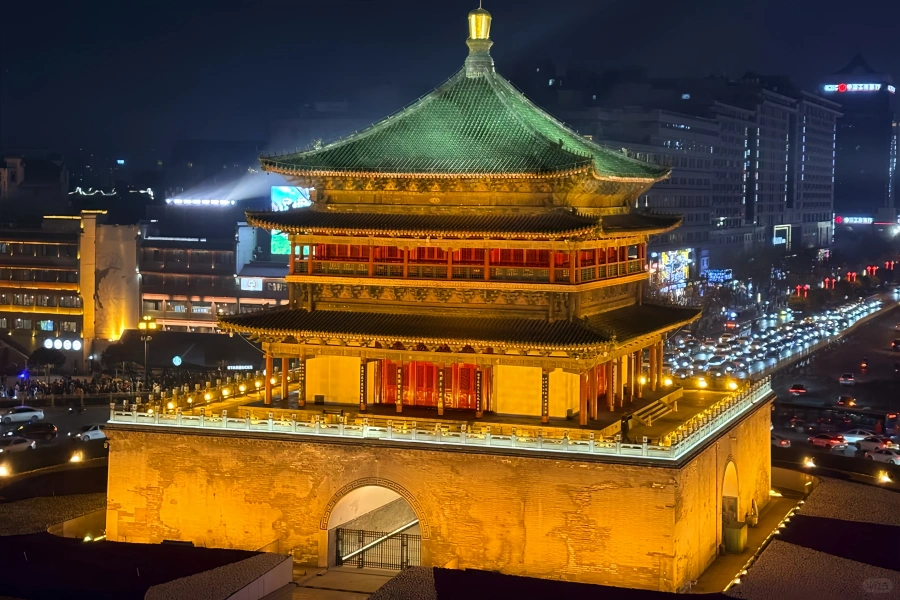
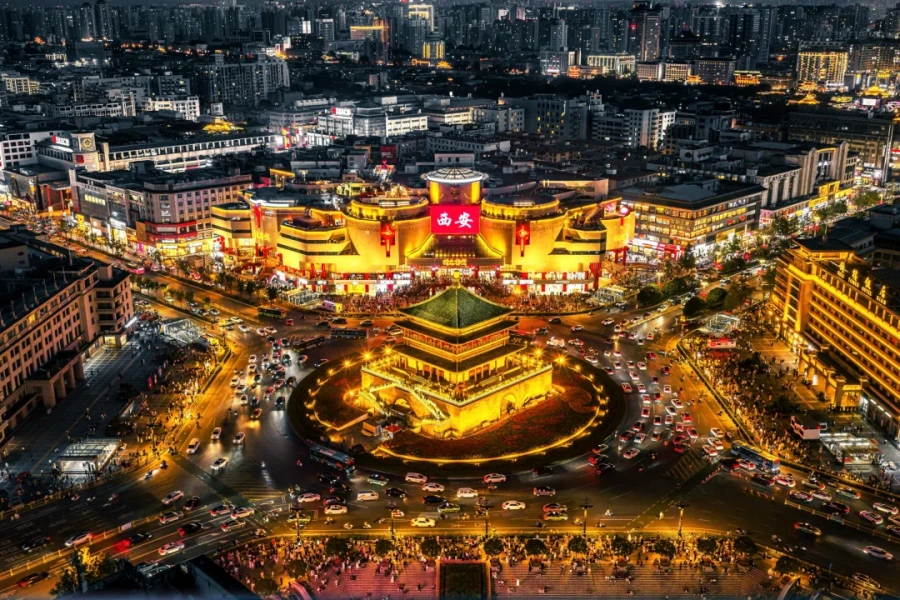
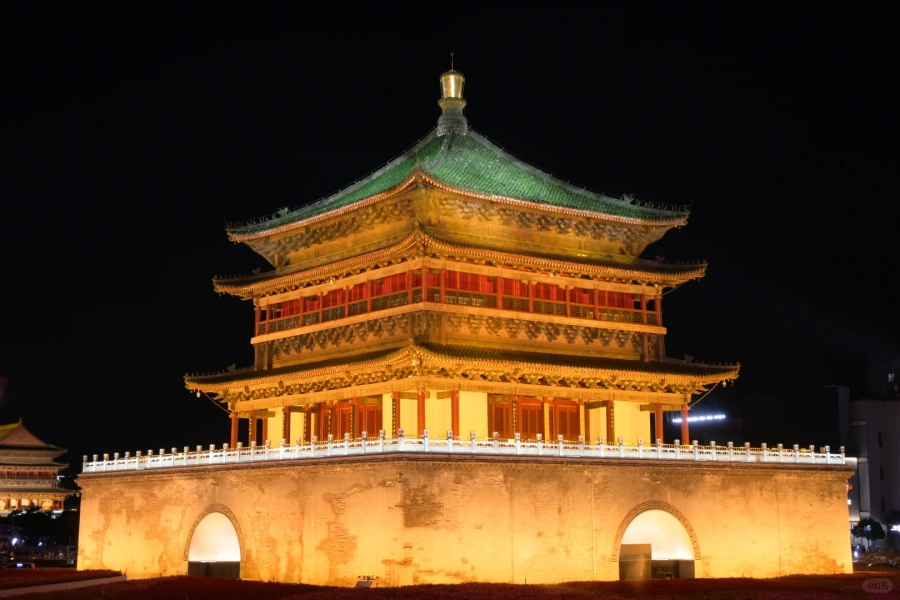
A Variation of Light and Shadow Between Day and Night: The Bell Tower's charm reaches its climax at dusk. By day, it is a solemn history book of blue bricks, gray tiles, and vermilion-lacquered wooden windows; by night, it transforms into a dazzling, glittering jewel of the city. A professional floodlighting system allows this ancient building to exude a dreamlike allure in the night, forming, together with the endless river of car lights, Xi'an's most iconic night view.
Photography Tips:
Classic frontal shooting position: The square or pedestrian overpass in front of Kaiyuan Shopping Mall can capture a panoramic view of the clock tower and the trajectory of traffic.
> Framing composition: Use the archway at the base of the clock tower as a natural frame to photograph the street scene or pedestrians across the street.
> Night view reflection shot: When the ground is flooded after rain, take a low-angle shot of the reflection of the clock tower lights in the water, creating a very dynamic image.
> A vantage point for a dialogue between the past and present: From the northeast corner of the clock tower, you can frame the clock tower together with the modern buildings behind it (such as the Clock Tower Hotel), creating a sense of collision between time and space.