Humanistic Craftsmanship - The solemn sequence from Sanqing Hall to Bagua Pavilion
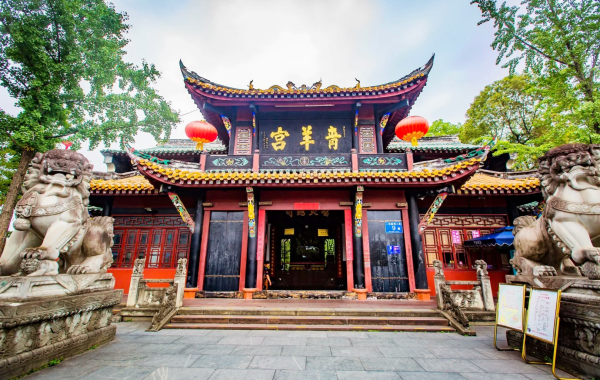
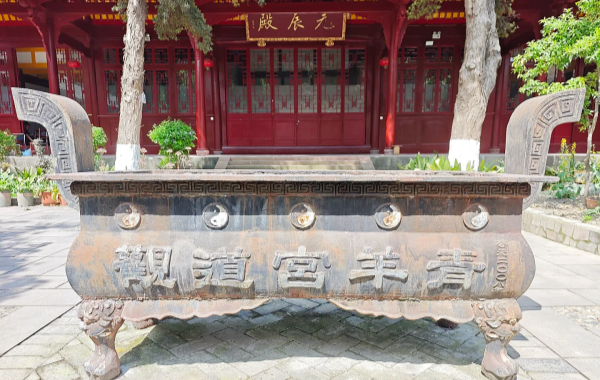
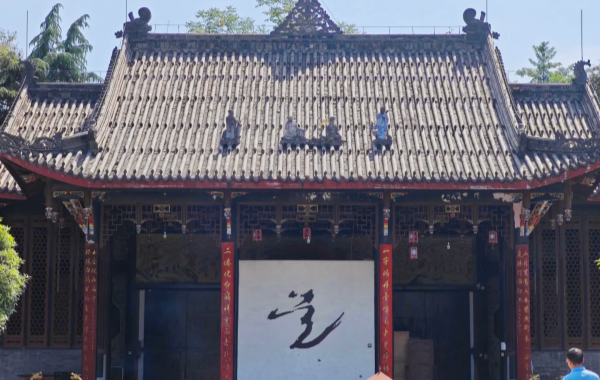
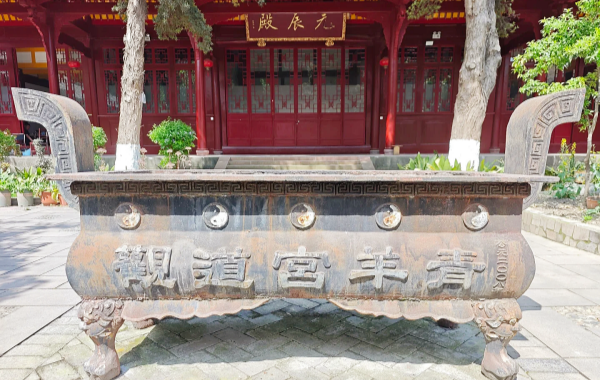
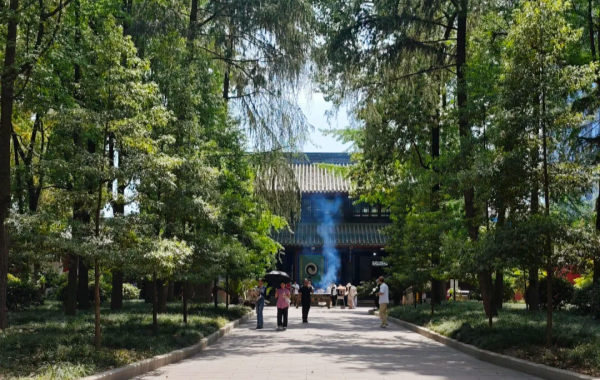
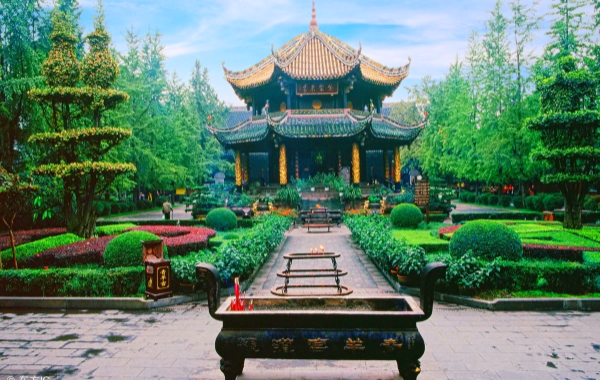
The architectural complex of Qingyang Palace follows the traditional pattern of Taoist temples, with the main halls arranged on the central axis, layer by layer, creating a magnificent atmosphere.
Mountain Gate and Lingzu Hall: Above the towering mountain gate hangs a golden plaque reading "Qingyang Palace". The first hall after entering is the Lingzu Hall, where the Taoist guardian deity Wang Lingguan is enshrined. His majestic image with a red face, three eyes, and holding a golden whip guards the purity of the dojo.
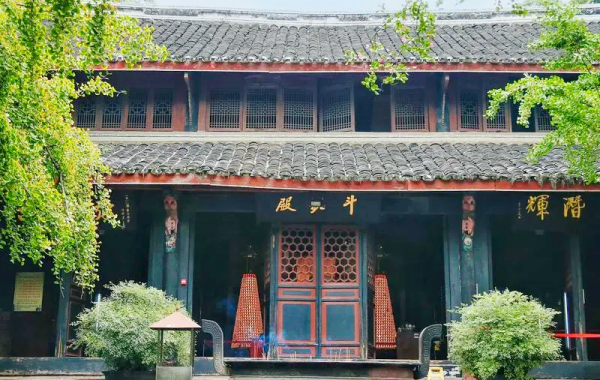
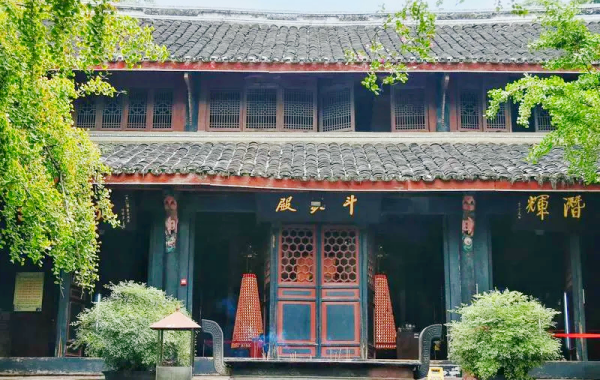
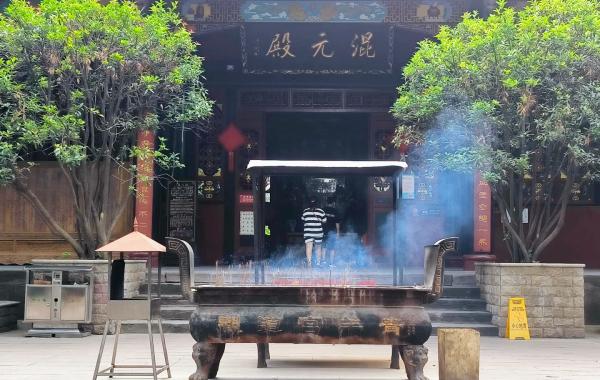
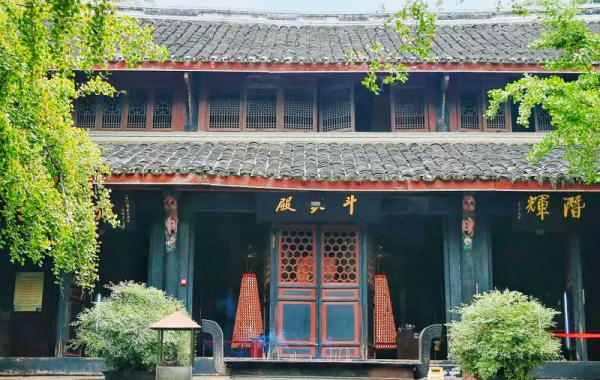
The Hunyuan Hall and the Sanqing Hall: The second hall, the Hunyuan Hall, enshrines the supreme Taoist deity, the "Hunyuan Ancestor" (also known as the Taishang Laojun). The Sanqing Hall behind it is the core building of the palace, where the three highest deities of Taoism are solemnly enshrined: Yuqing Yuanshi Tianzun, Shangqing Lingbao Tianzun, and Taiqing Daode Tianzun. The grand scale and majestic atmosphere of the main hall building.
Doumu Hall and Tang King Hall: The Doumu Hall in the backyard enshrines the mother of the North Star, Doumu Yuanjun. The adjacent Tang King's Palace bears in mind the history of Emperor Xizong's decree to build the Qingyang Palace, and the murals inside vividly tell this legendary story.
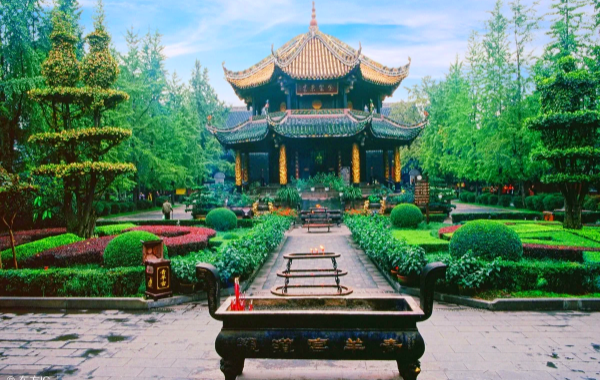
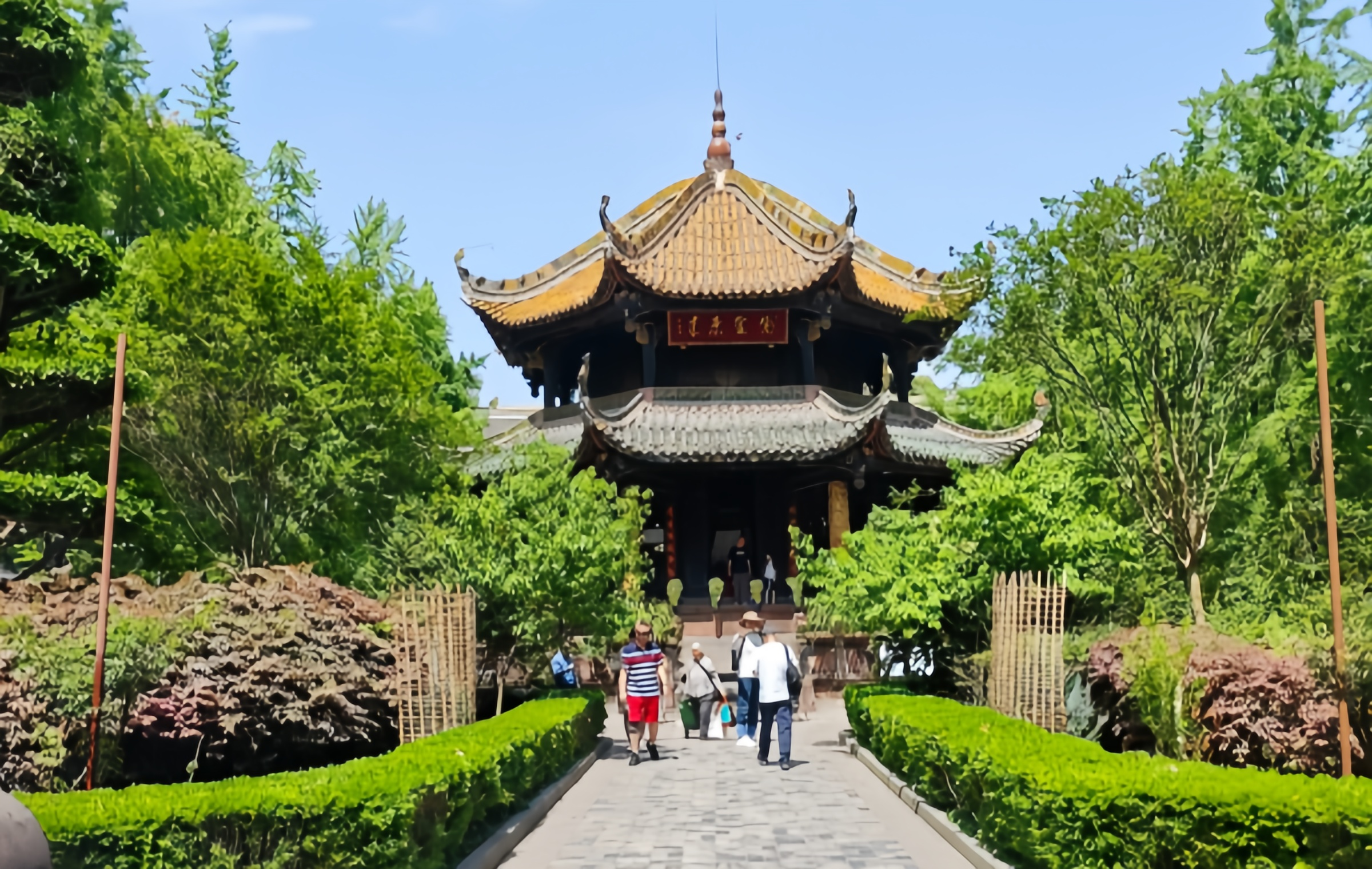
Bagua Pavilion: The iconic building of Qingyang Palace, which can be regarded as a treasure of architectural art. This pavilion is built entirely according to the Taoist cosmology, with an octagonal shape symbolizing the Eight Trigrams; The pavilion is supported by eight carved dragon stone pillars, with yellow and green glazed tiles covering the top. The carvings inside and outside are intricate and exquisite, integrating stone carvings, wood carvings, sculptures, and painted decorations. It does not require a single nail or rivet, and is securely fastened with mortise and tenon joints, making it incredibly stable.
Spiritual Objects and Secret Realms - Treasures of the Town Palace and Urban Gardens
The wonder of Qingyang Palace lies not only in the architecture itself, but also in its unique object that carries spirituality and nature.
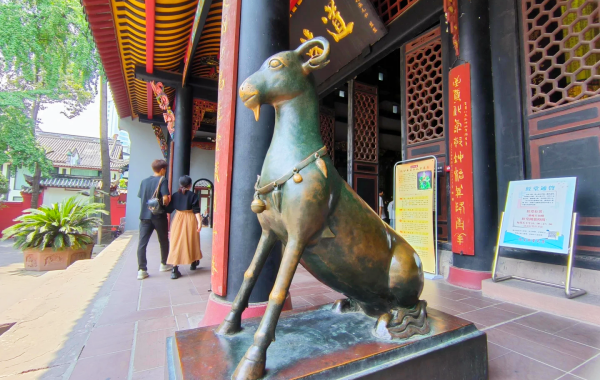
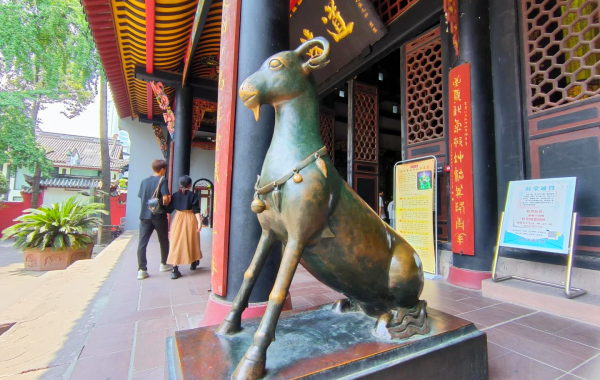
Bronze God Sheep (Unicorn): The most famous "star" of Qingyang Palace, located in front of Sanqing Hall. This pair of bronze sheep has a unique shape, with one of them being a collection of the characteristics of the twelve zodiac animals (rat ears, ox nose, tiger claws, rabbit back, dragon horn, snake tail, horse beak, sheep whiskers, monkey neck, chicken eyes, dog belly, pig buttocks), passed down as a relic of the Southern Song Dynasty and revered as a divine beast. The folk firmly believe that touching the bronze sheep can dispel diseases and disasters, especially touching the parts corresponding to their zodiac sign. Therefore, their whole body is touched brightly, becoming a unique scenery.
Lu Zu Stone Carving: It is a White Marble stone carving of Lu Dongbin, a famous Taoist and one of the "Eight Immortals" in the Tang Dynasty, consecrated to the side of Doumu Hall. It has smooth lines and is immortal. It is a precious Taoist cultural relic.
Erxian Temple Garden: The Erxian Temple adjacent to Qingyang Palace is a jungle of the Longmen Sect of Quanzhen Taoism built in the Qing Dynasty. Its interior is a typical layout of western Sichuan gardens, with towering ancient trees, exquisite bonsai, and winding paths leading to secluded places. The "Tea Ceremony" cultural experience area in the park allows people to enjoy tea in an elegant environment and experience the "Taoist tea flavor" beyond the "Zen tea flavor".
Photography tips:
Eye of Architectural Art: On the side of the Bagua Pavilion, a wide-angle lens is used to capture the intricate structure of the octagonal eaves and carved dragon stone pillars.
Moments of Humanistic Interaction: Capture the vivid scene of tourists devoutly caressing bronze sheep in front of the Sanqing Hall.
Quiet Corner of the Garden: Searching for the scene of light and shadow passing through the cracks of ancient trees and sprinkling on the bluestone board on the quiet path of Erxian Temple.