Architectural Treasures—A Century of Craftsmanship in Blue Bricks and Gray Tiles
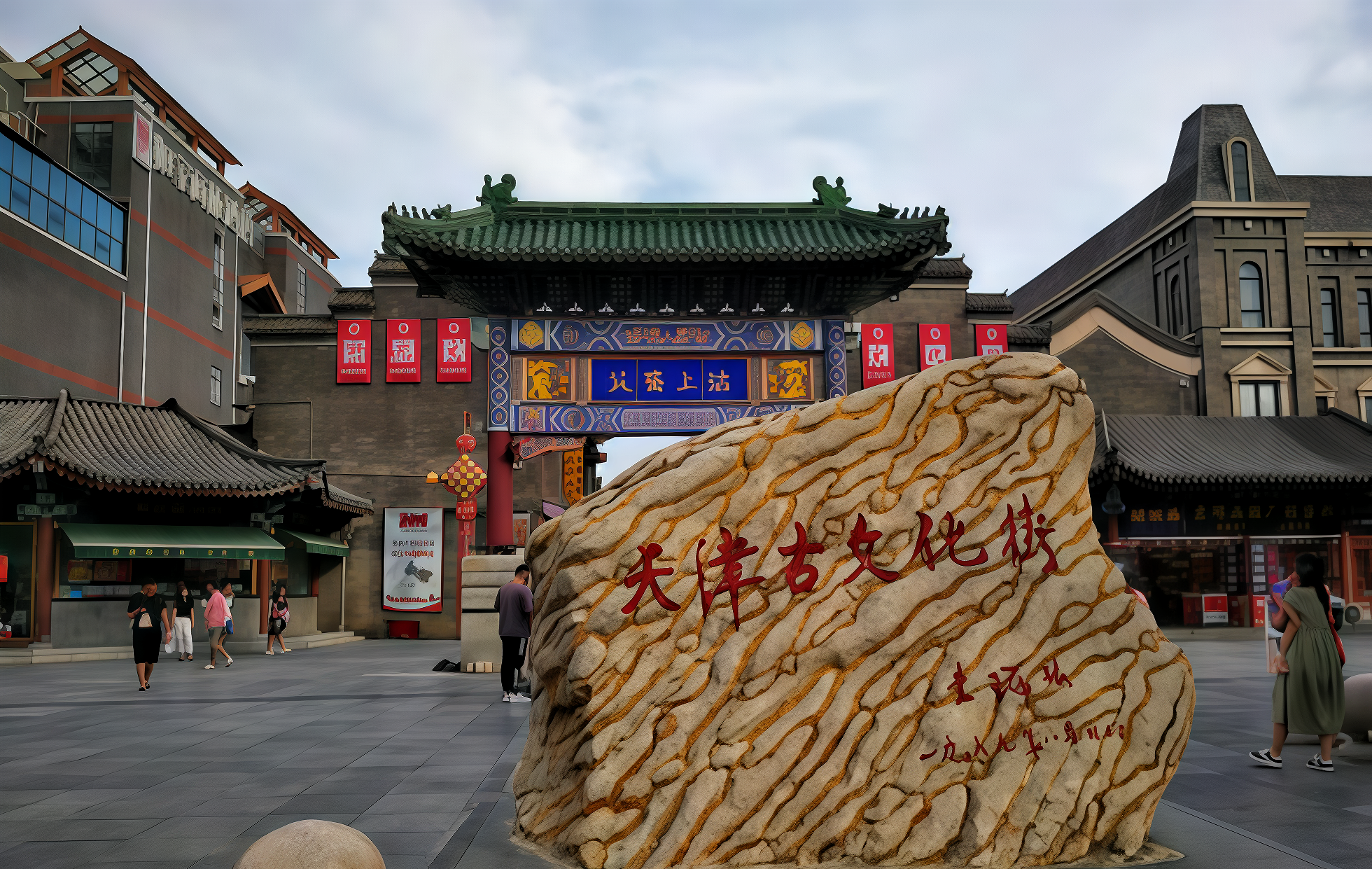
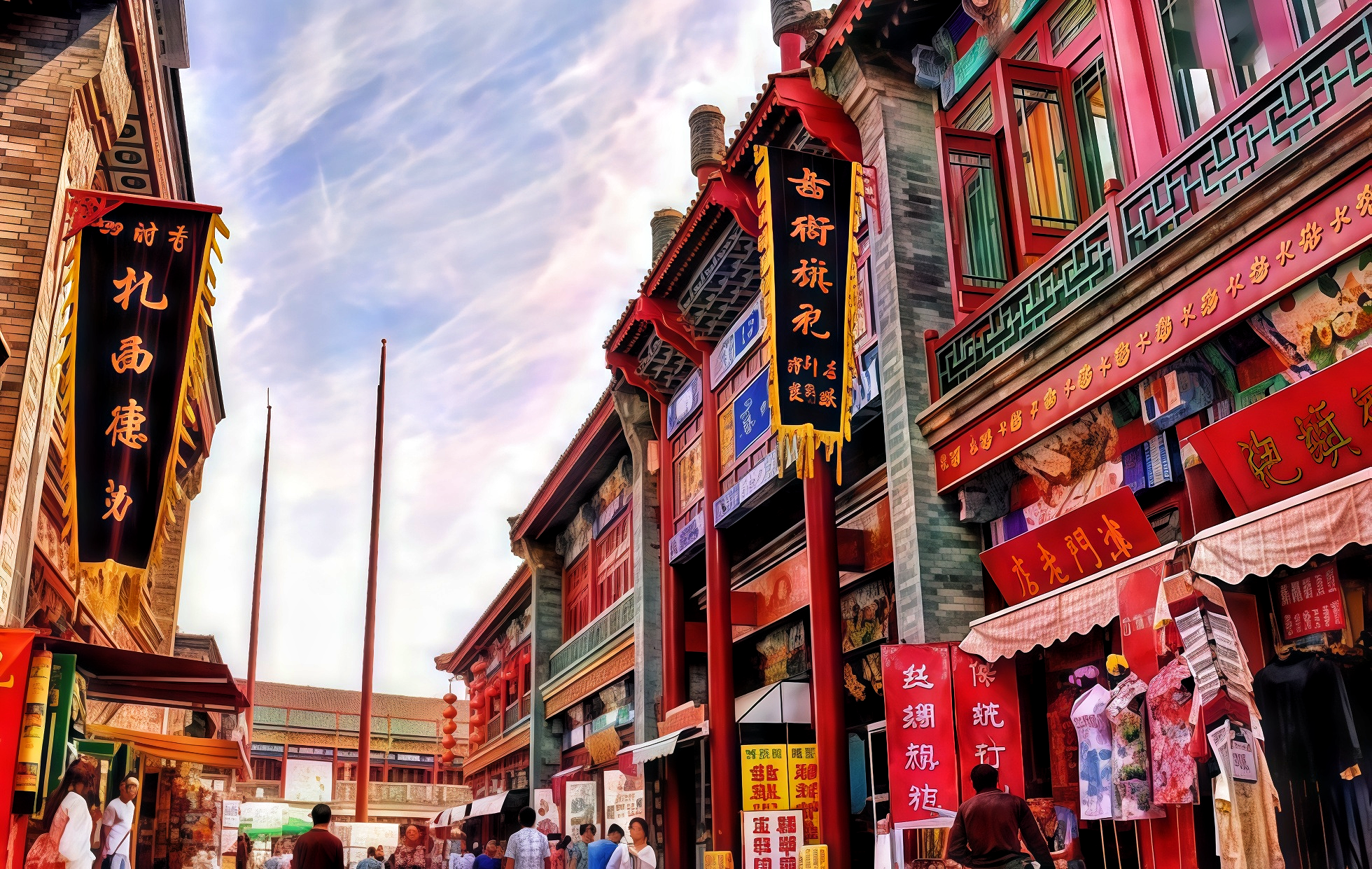
The architectural complex of Ancient Culture Street is, in itself, a visual feast that embodies the authentic "flavor of Tianjin."
The Temple of the Heavenly Empress (Tianhou Temple): Guardian of the Grand Canal's Legacy
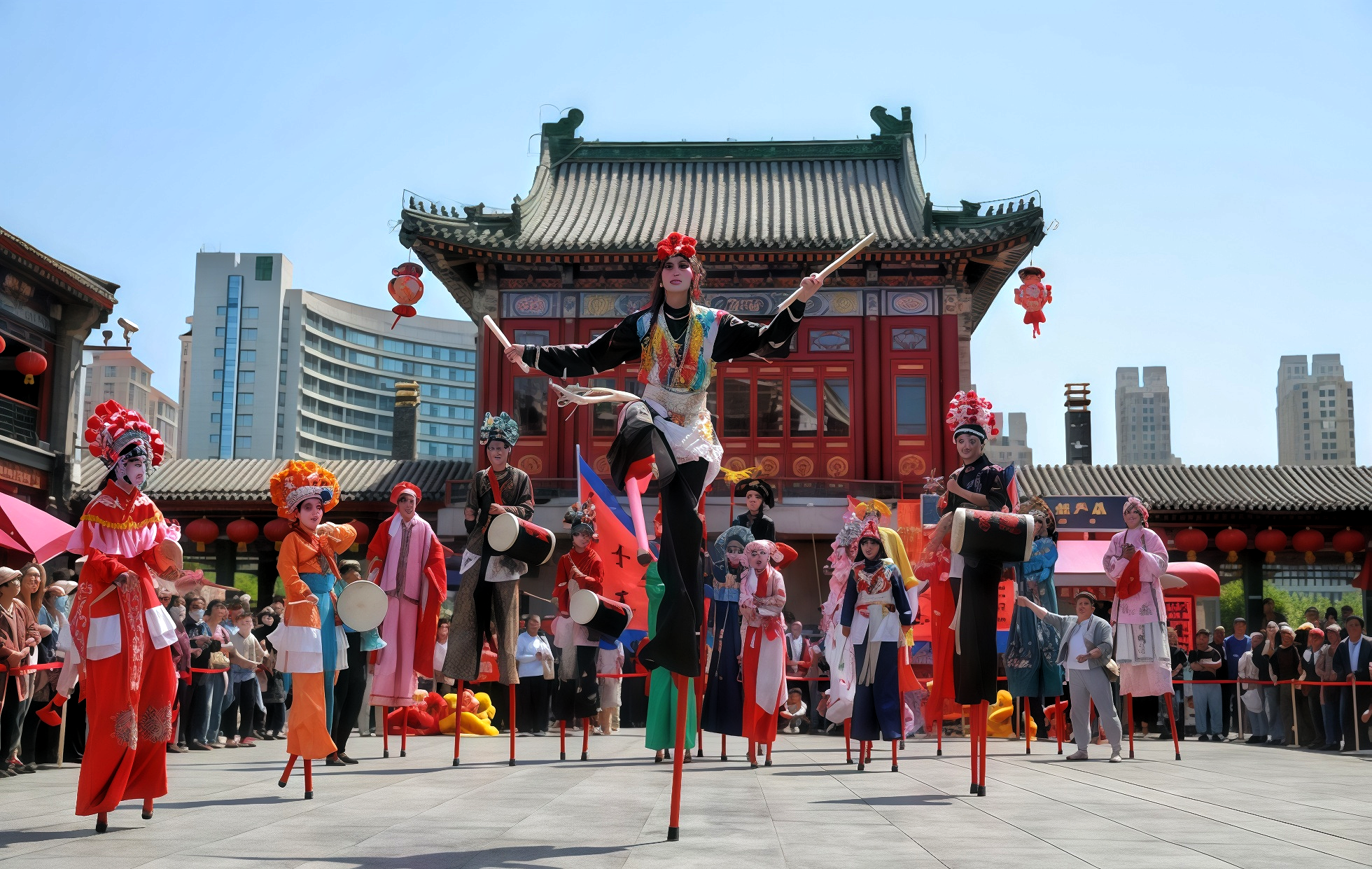
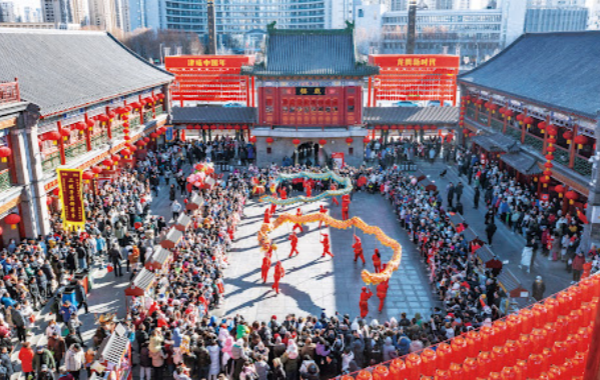
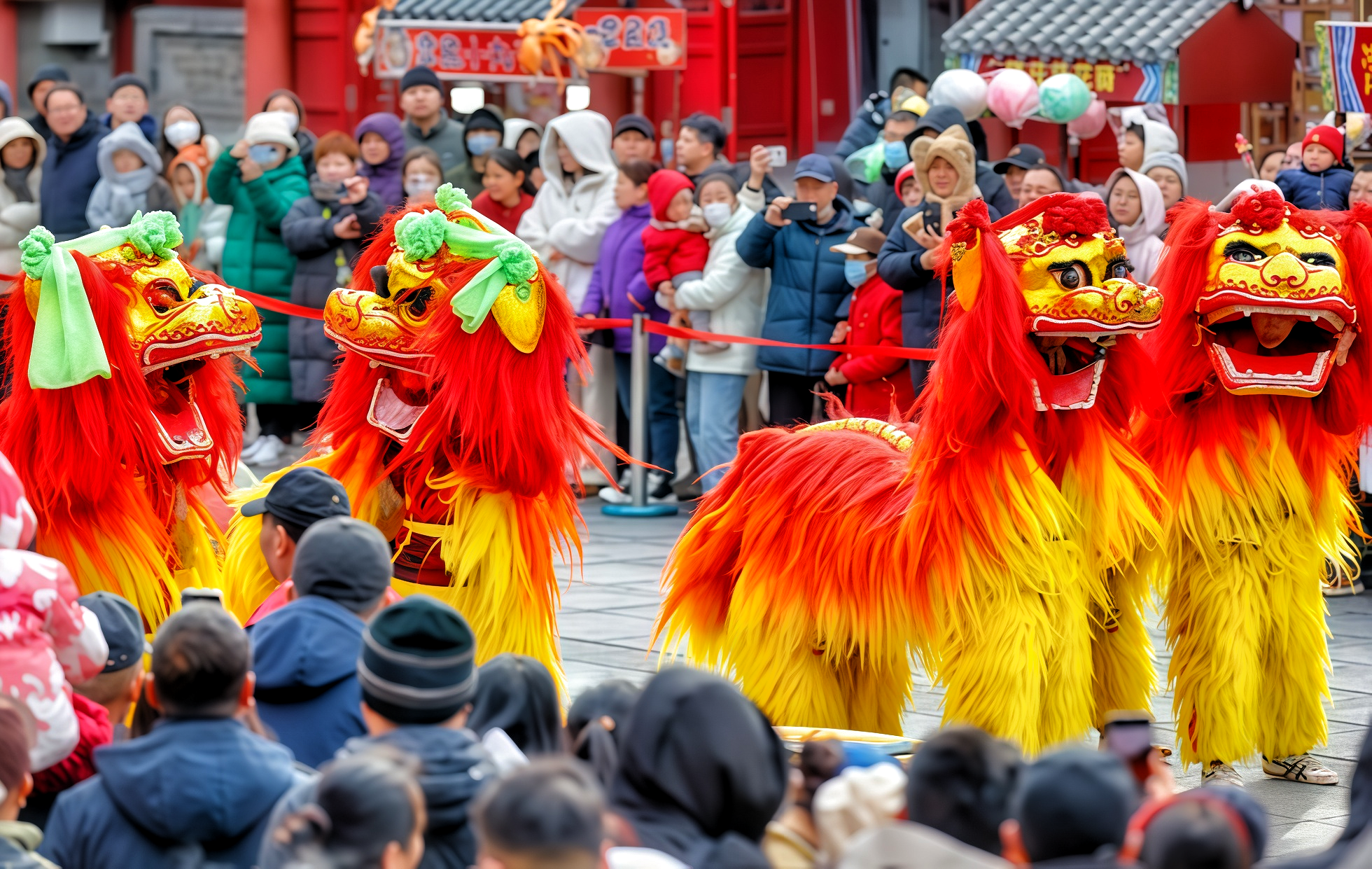
The Temple of the Heavenly Empress serves as the very soul of Ancient Culture Street and stands as one of China's three major temples dedicated to Mazu (the Goddess of the Sea). Originally constructed in the third year of the Taiding reign of the Yuan Dynasty (1326), the temple has undergone centuries of renovation yet retains its original architectural layout from the Ming and Qing dynasties to this day. Standing prominently before the palace gates are two towering banner poles, each 26 meters in height. Constructed from a series of joined copper-clad and iron-clad wooden sections, these poles have served for centuries as navigational beacons for passing vessels, while also bearing witness to the turbulent history and transformations of Tianjin. Every year on the 23rd day of the third lunar month—the birthday of the Goddess "Tianhou"—a grand temple fair is held here. Traditional performances such as dragon dances, lion dances, stilt-walking, and ritual drumming take the stage in turn, accompanied by the thunderous clamor of gongs and drums, creating an atmosphere of extraordinary festivity.
Tongqingli: An Aesthetic Fusion of East and West
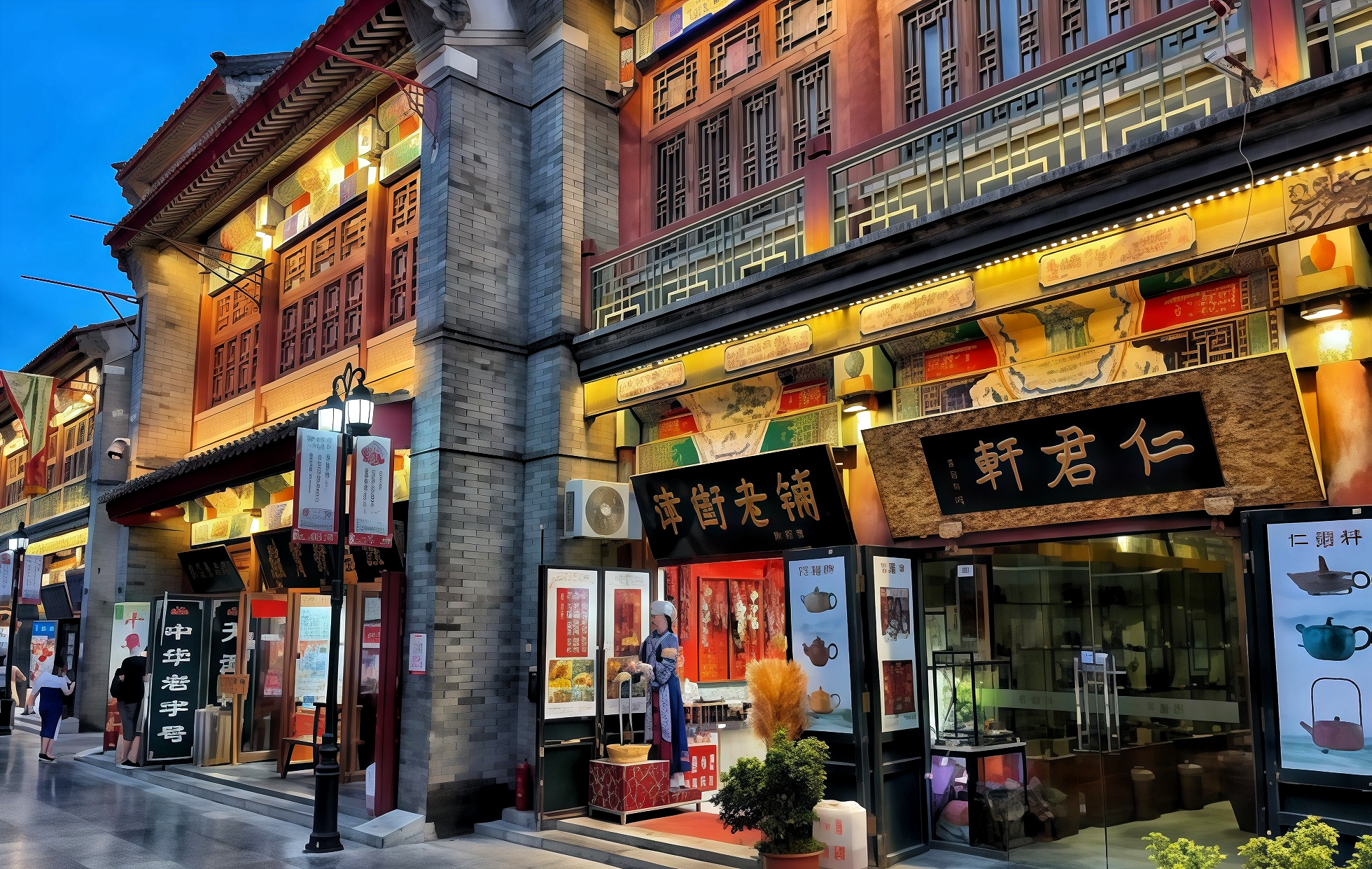
Located on the northeast side of Ancient Culture Street, Tongqingli is the largest and best-preserved complex of hybrid Chinese-Western lilong (lane-style) architecture still standing in Tianjin. Originally constructed in the second year of the Republic of China (1913), the complex is said to have once housed a major silver exchange before being converted into residential housing. Amidst a foundational aesthetic of blue bricks and gray tiles—characteristic of the traditional Huizhou architectural style—European elements such as bas-reliefs and arched doorways have been skillfully integrated, resulting in a unique architectural style. The brick carvings adorning the blue-brick walls are exquisitely intricate, featuring a blend of traditional Chinese auspicious motifs and Western decorative patterns; it serves as an ideal backdrop for photography enthusiasts seeking to capture vintage-style masterpieces.
The Memorial Arches and the Opera House: Gateways and Stages of the District
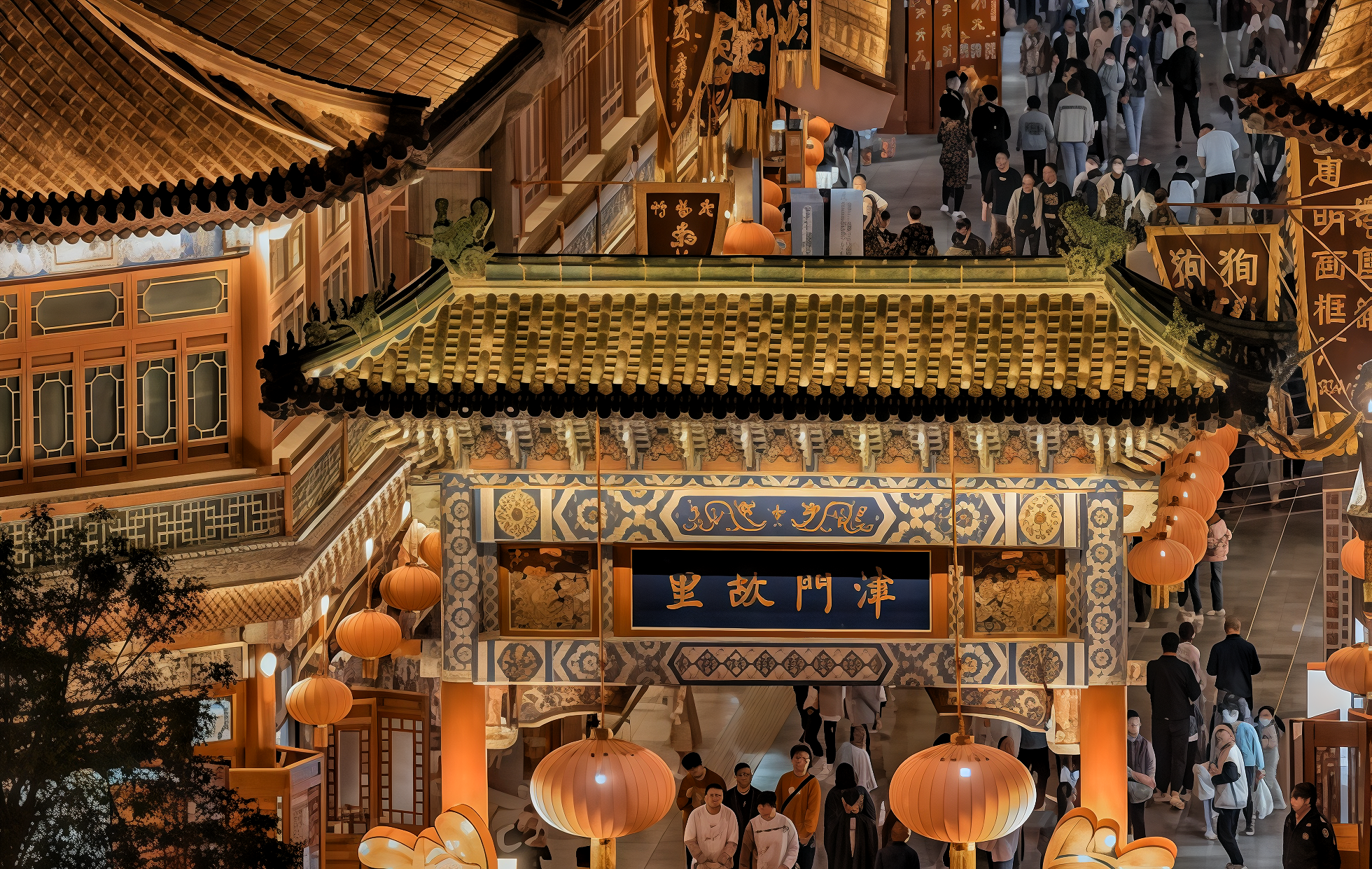
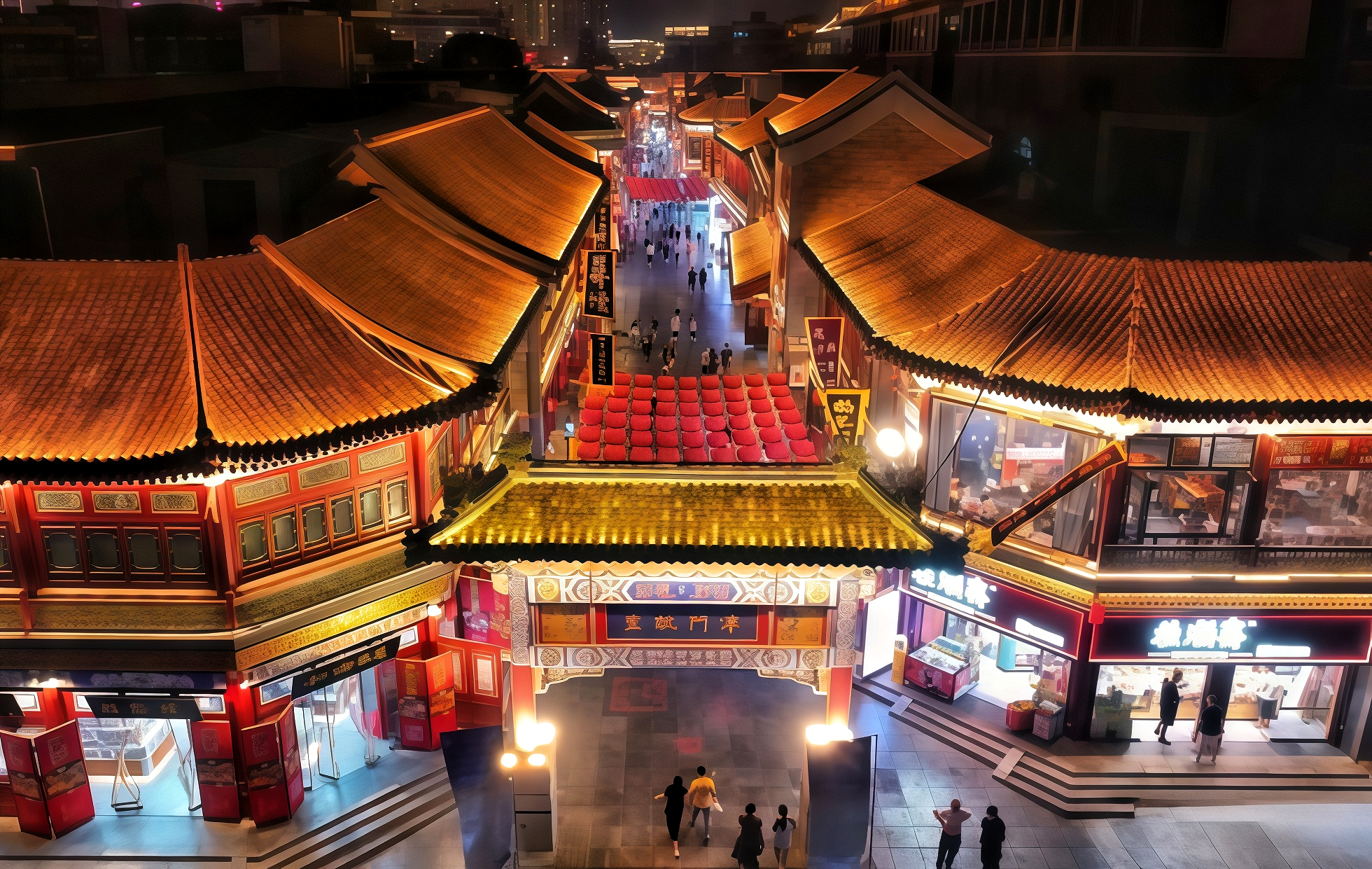
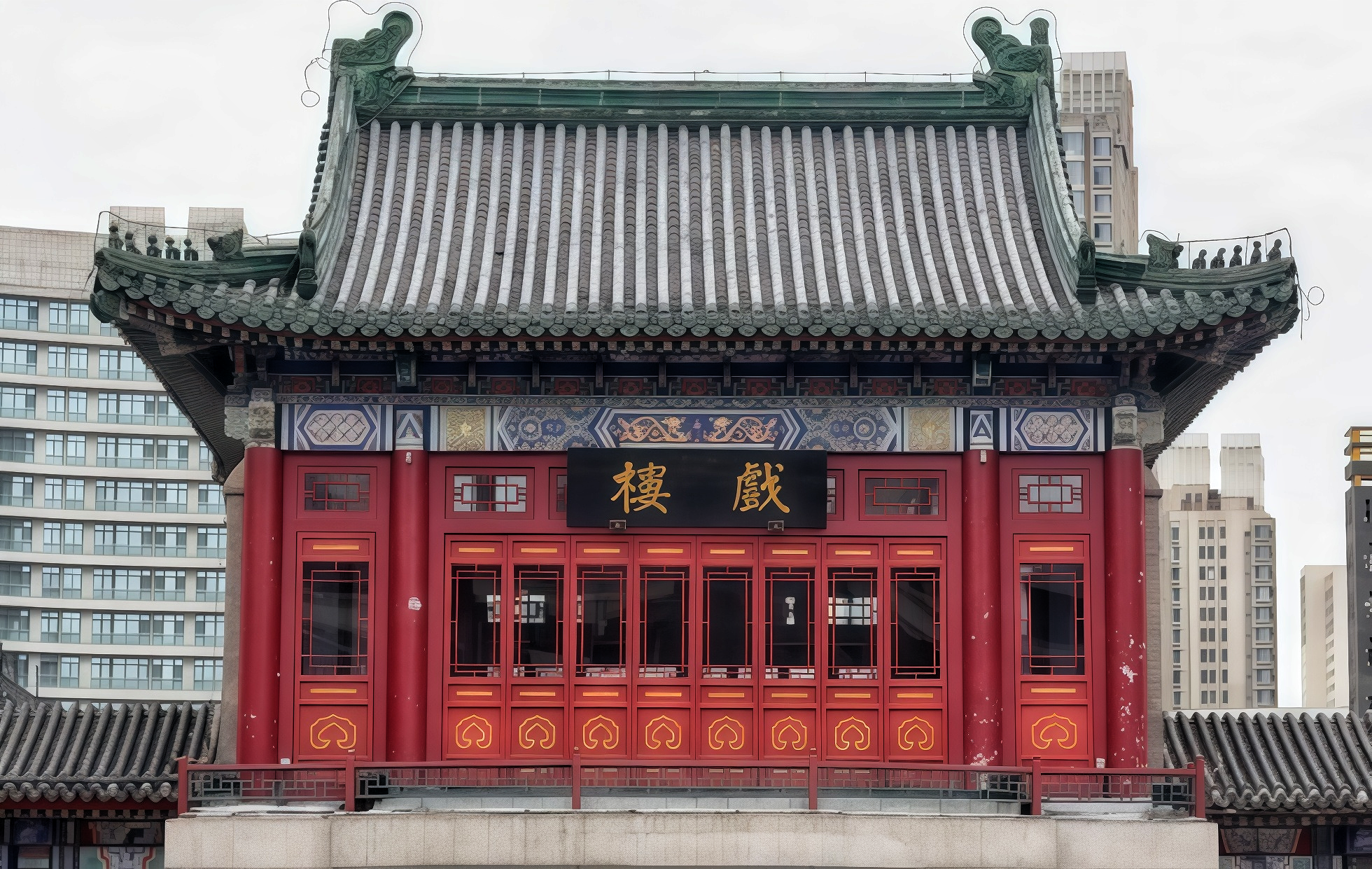
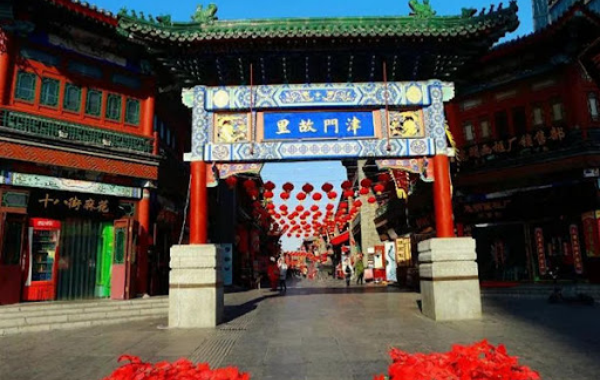
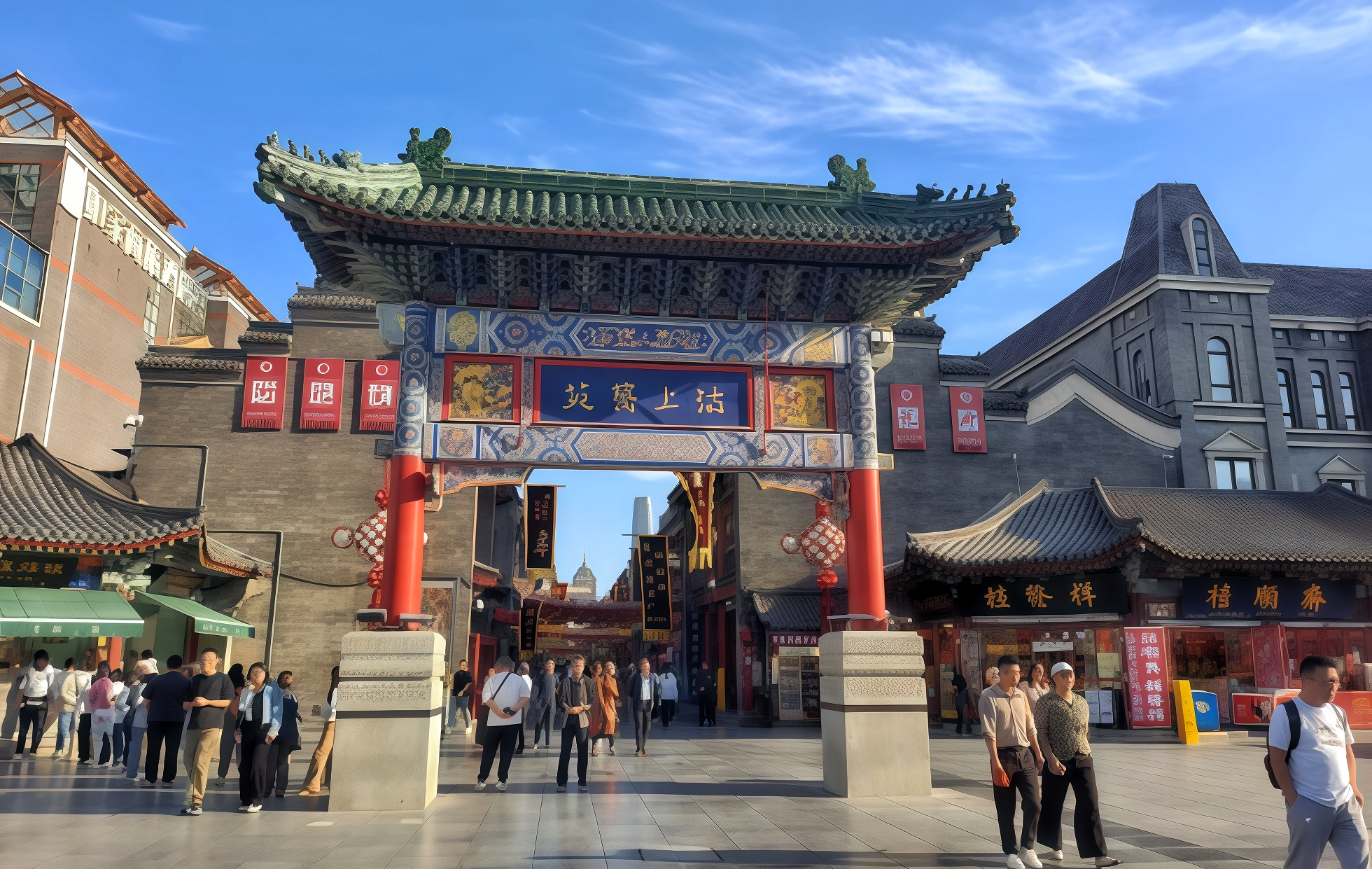
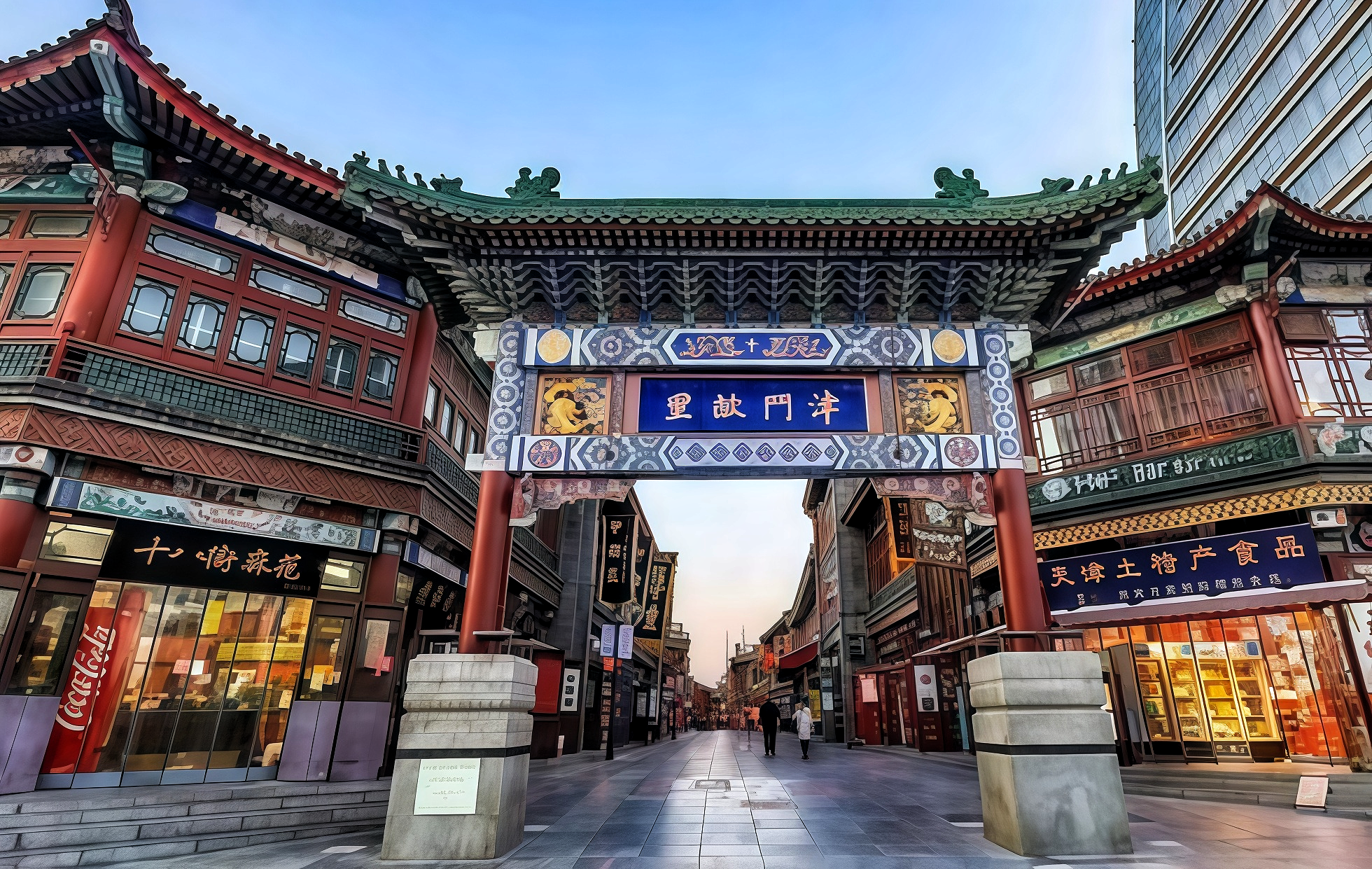
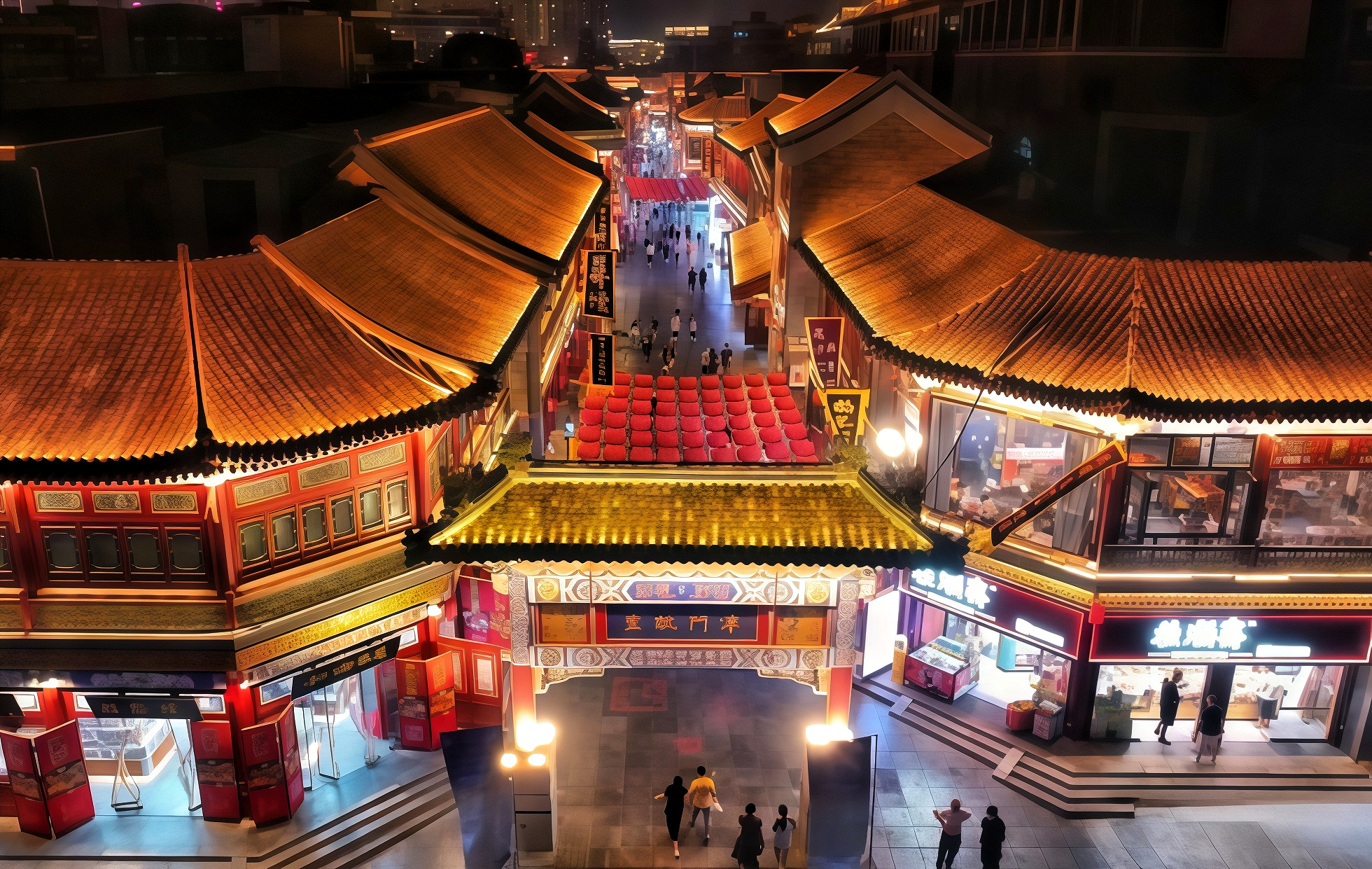
At the northern and southern ends of the street stand two painted memorial arches (paifang), inscribed with the phrases "Jinmen Guli" (The Ancient Home of Tianjin) and "Gushang Yiyuan" (The Artistic Garden of Gushang), which collectively set the tone for the entire street. The Opera House, originally built in the 53rd year of the Qianlong reign during the Qing Dynasty (1788), is the oldest surviving venue for theatrical performances in Tianjin; it was fully restored in 1986. This wooden, multi-tiered structure exudes an air of rustic elegance. To this day, during holidays and festivals, the venue continues to host traditional performances—including Peking Opera, Pingju Opera, and various forms of Quyi (narrative and musical arts). As the audience gathers below—some seated, others standing—the lively atmosphere evokes a sense that time itself has turned back a century.
The Charm of the District: The Flowing Rhythm of Urban Life
Gongnan and Gongbei: A Timeless Stroll, Where Every Step Reveals a New Scene
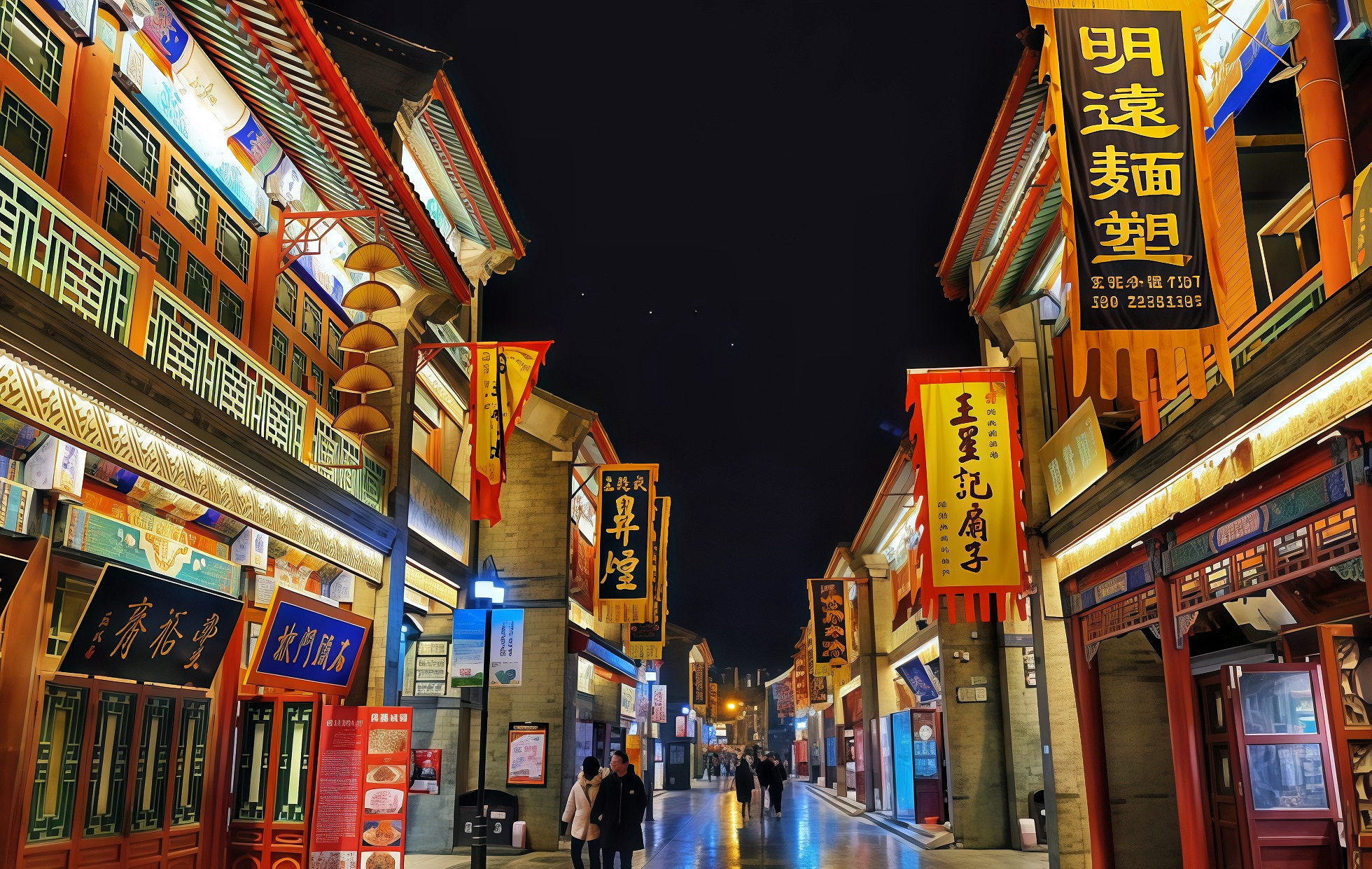
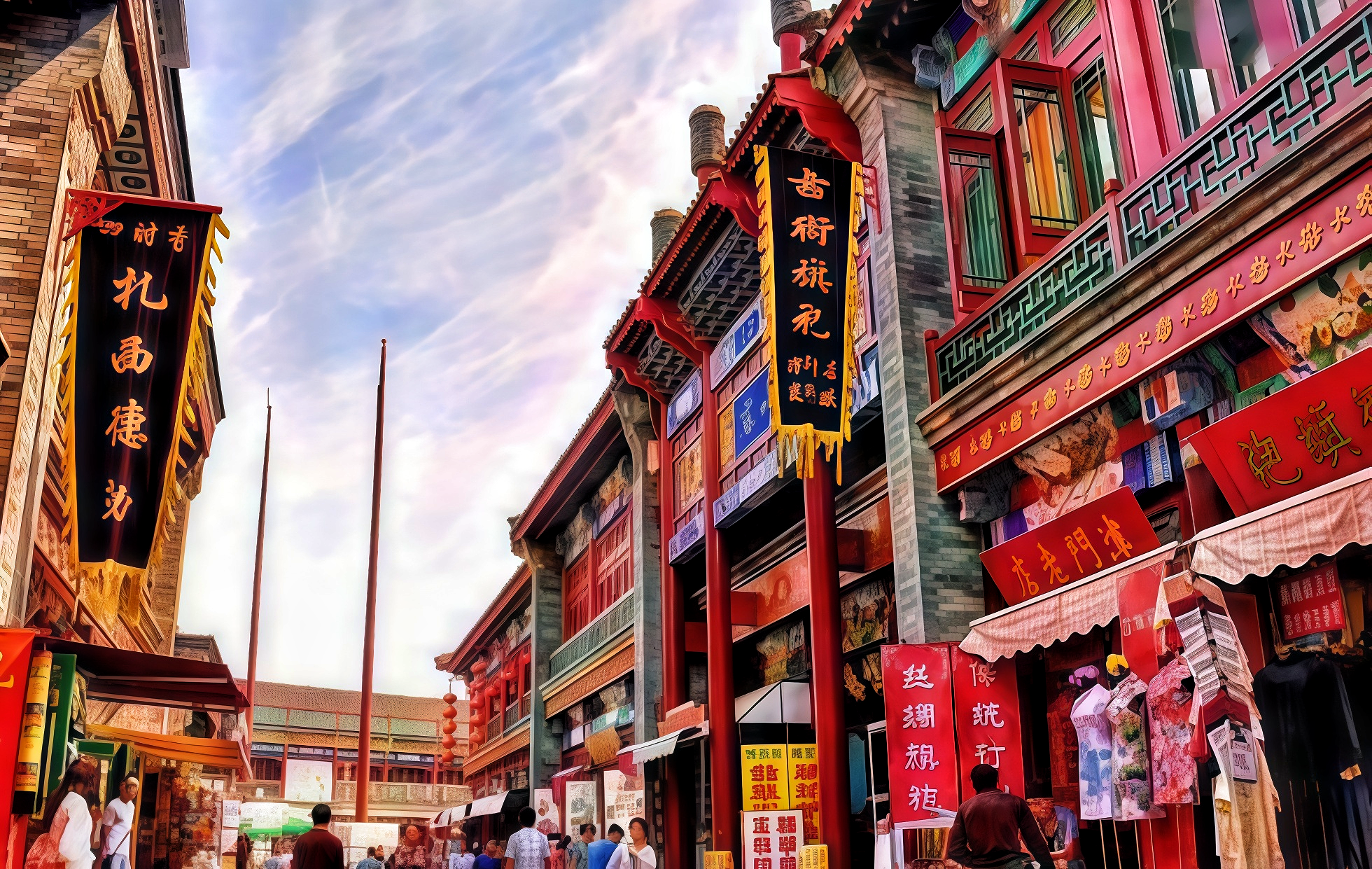
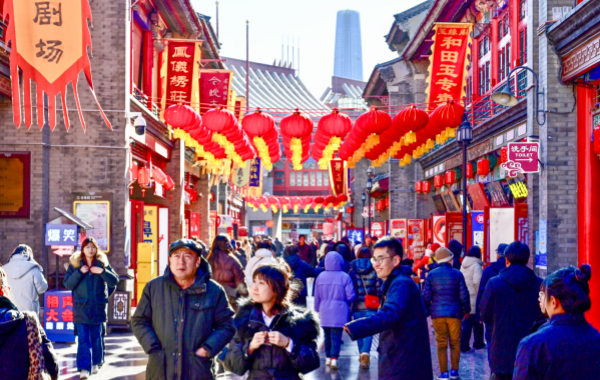
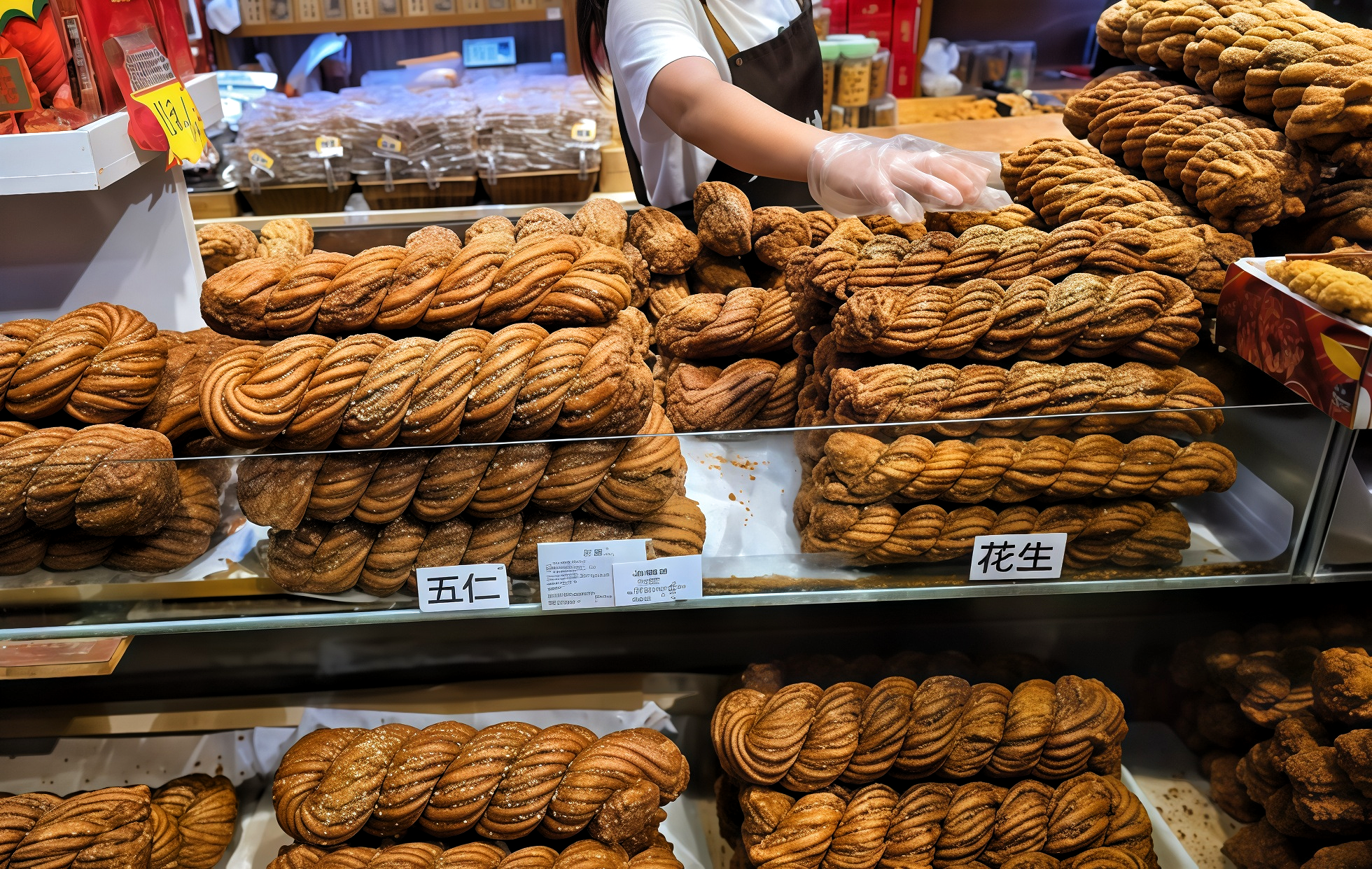
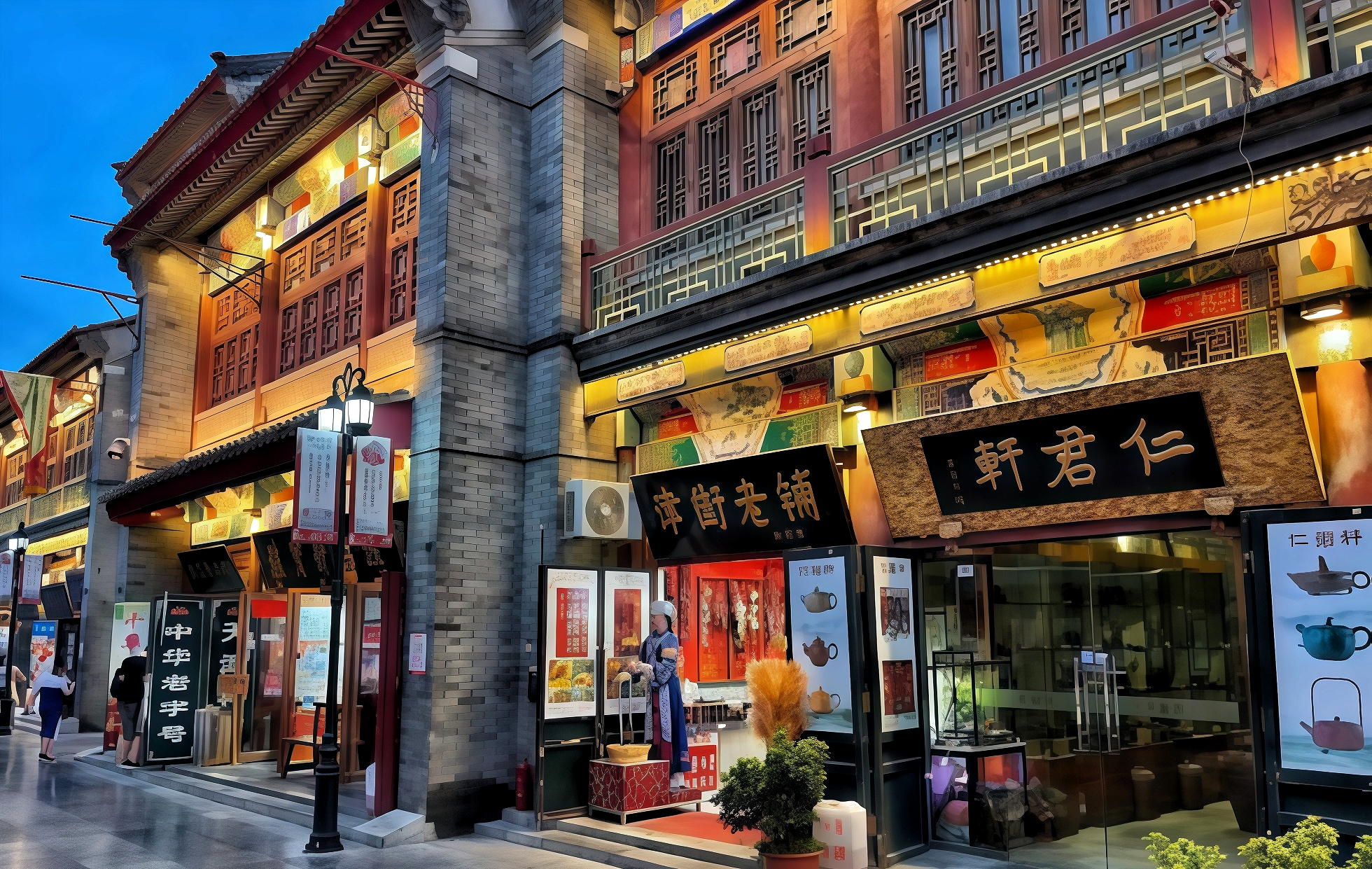
Ancient Culture Street spans a total length of 580 meters and is composed of two main thoroughfares: Gongnan Street and Gongbei Street. As you stroll through the area, a charmingly staggered array of antique-style buildings unfolds before you—characterized by azure walls, vermilion pillars, and meticulously fitted brickwork. Beneath the eaves, over 1,500 colorful paintings adorn the structures, depicting themes ranging from historical tales and mythological legends to flora, fauna, and insects. Decorative plaques, poetic couplets, palace lanterns, and fluttering banners dot the landscape, imbuing the entire street with an atmosphere rich in classical culture. Yet, this is no lifeless "museum," but rather a vibrant, living district; the lively calls of vendors drifting from the shops, the aroma of freshly fried pastries wafting through the air, and the bursts of applause echoing from the opera stage all infuse this historic street with boundless vitality.
Tianyan Square: An Intellectual Beacon Amidst the Bustle
Nestled within Dashizi Hutong, Tianyan Square serves as a tranquil sanctuary amidst the urban bustle. This site was once the Tianjin residence of Yan Fu—a pivotal figure in China’s modern Enlightenment movement and the first president of Peking University. It was here that Yan Fu spent three years translating Thomas Huxley’s Evolution and Ethics (known in Chinese as Tianyan Lun). In doing so, he introduced the evolutionary concepts of "competition among species, natural selection, and survival of the fittest" to the Chinese public, sounding a clarion call for national salvation and survival. The square features a bronze statue of Yan Fu and a stone inscription of Evolution and Ethics, inviting visitors to pause and engage in a "cross-temporal dialogue" with the ideas of this pioneering Chinese thinker.
"Jin-Hong Impressions" and Da Ren Tang: New Ways to Experience an Old District
The Ancient Culture Street is also undergoing a continuous process of revitalization. Located next to the opera stage, the "Jin-Hong Impressions" cultural and tourism experience center features a simulated container terminal control console and a 5D cinema, allowing visitors to enjoy an immersive, hands-on experience of the automated ship-unloading process at a modern port. Directly across the way, the Da Ren Tang Health & Lifestyle Center offers a creative new take on Traditional Chinese Medicine (TCM); ingredients such as Fuling (poria mushroom), Wuweizi (schisandra berries), and cinnamon are ingeniously incorporated into coffees, teas, and desserts. With poetic names like "Plum Blossoms Kissed by Frost" and "Gathering Chrysanthemums by the Eastern Fence," these unique offerings are attracting wave after wave of young visitors.
> Photography Tips:
> The best photo spot is at the "Jinmen Guli" archway, offering a perspective that captures the full depth and length of the entire street;
> The brick carvings and interplay of light and shadow in Tongqing Alley are ideal for vintage-style portraiture; wearing a qipao or Republic-era attire is highly recommended;
> The banner pole at the Tianhou Temple serves as the highest vantage point in the district; shooting from a low angle accentuates the grandeur and imposing stature of the architecture;
> The rich hues of the blue bricks and grey tiles appear most vibrant during the soft lighting of early morning or late evening.