A Visual Marvel: A Skyline Defined by Bridge and Wheel
The unique allure of the Tianjin Eye lies in its seamless integration of modern engineering technology with the historical and cultural fabric of the city.
The World's Only "Bridge-Wheel Fusion"
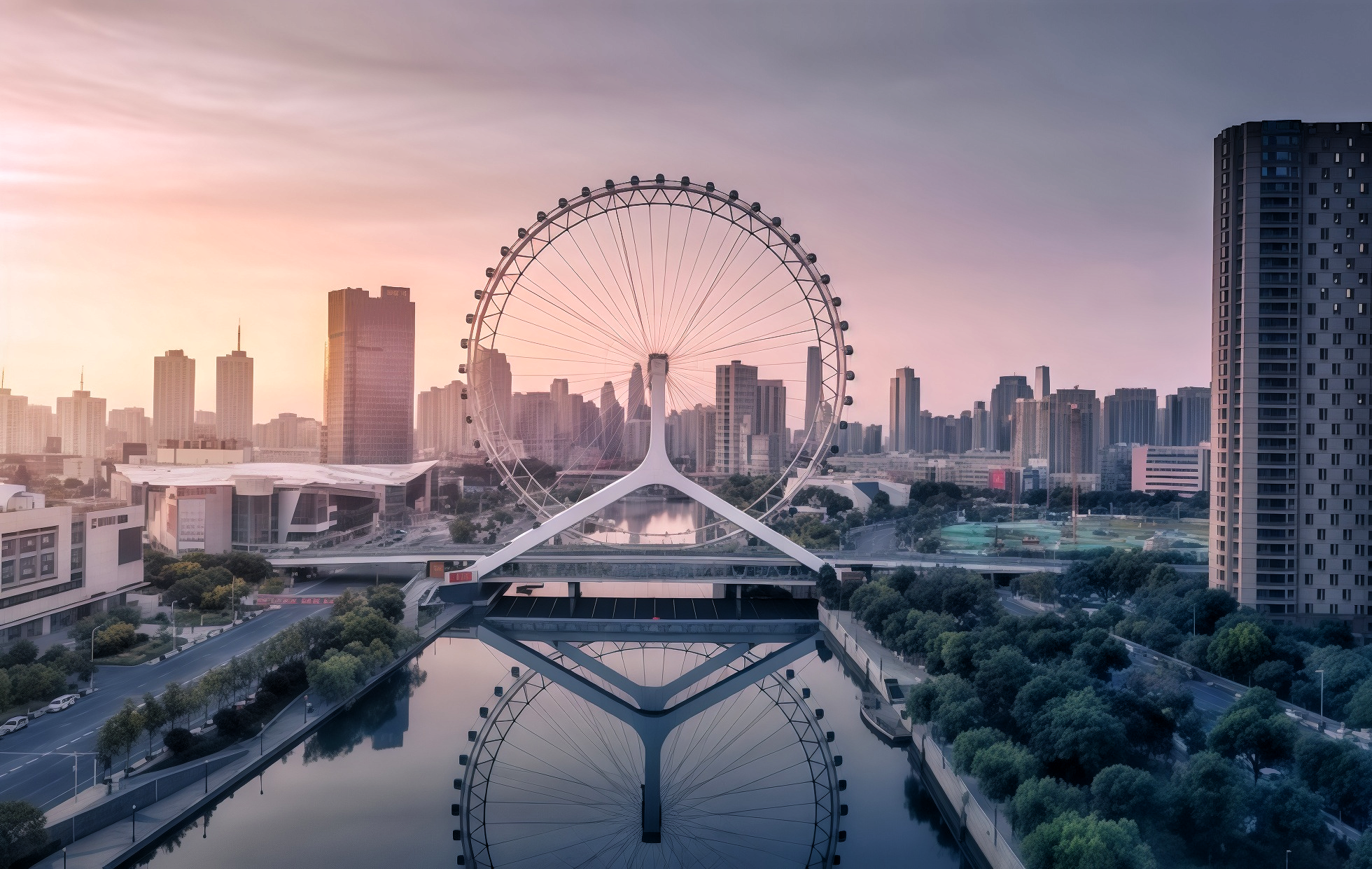
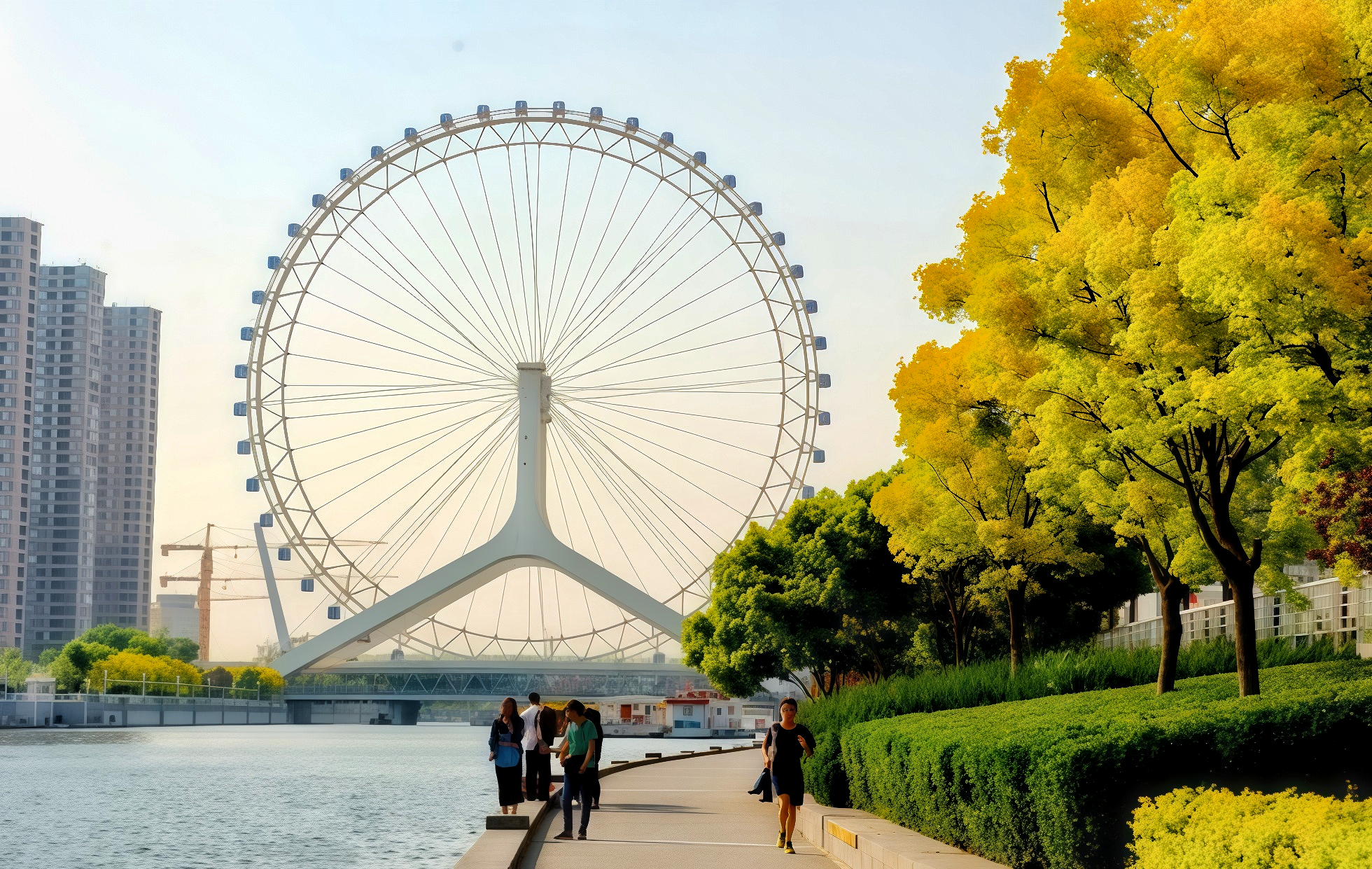
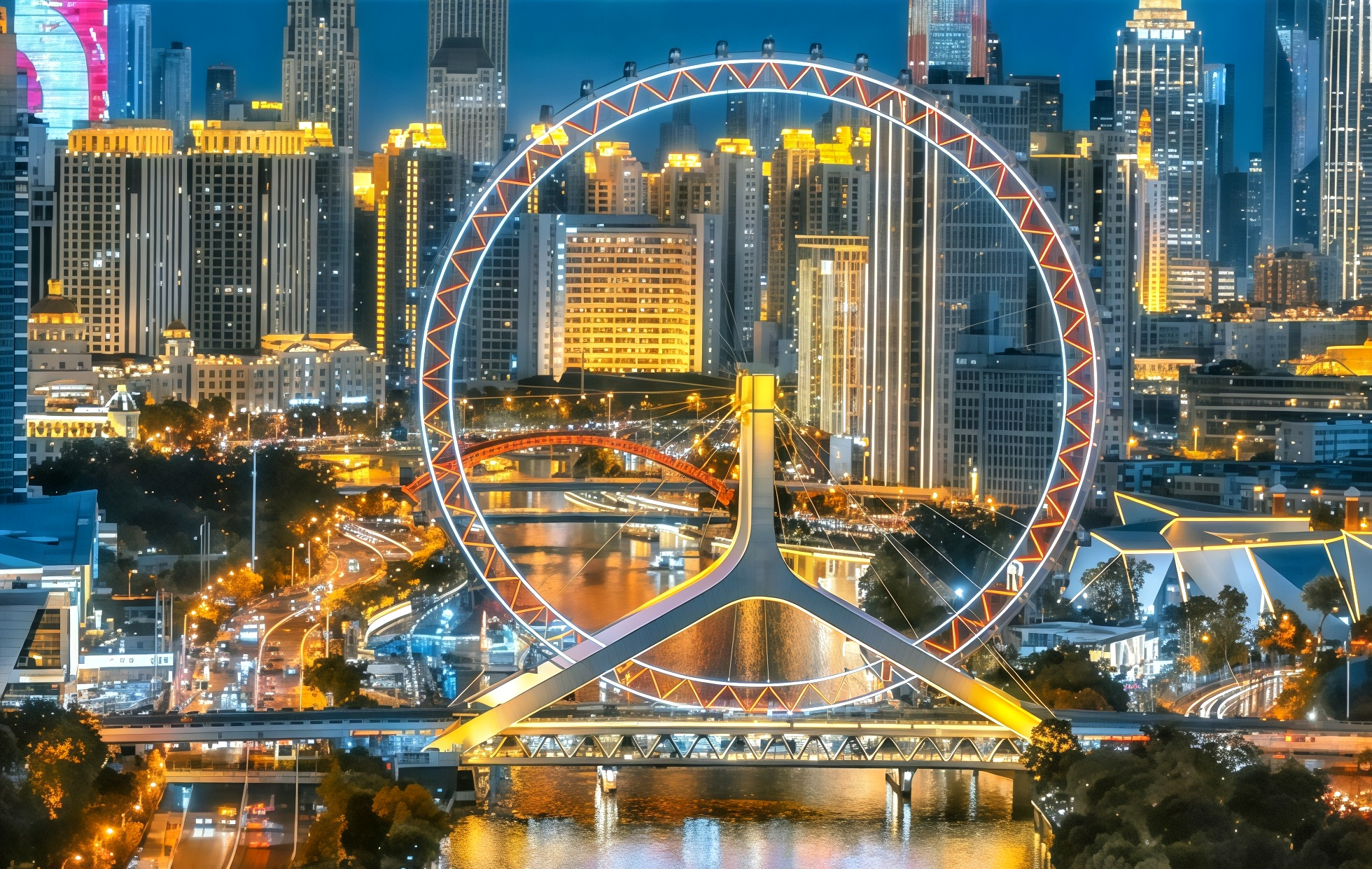
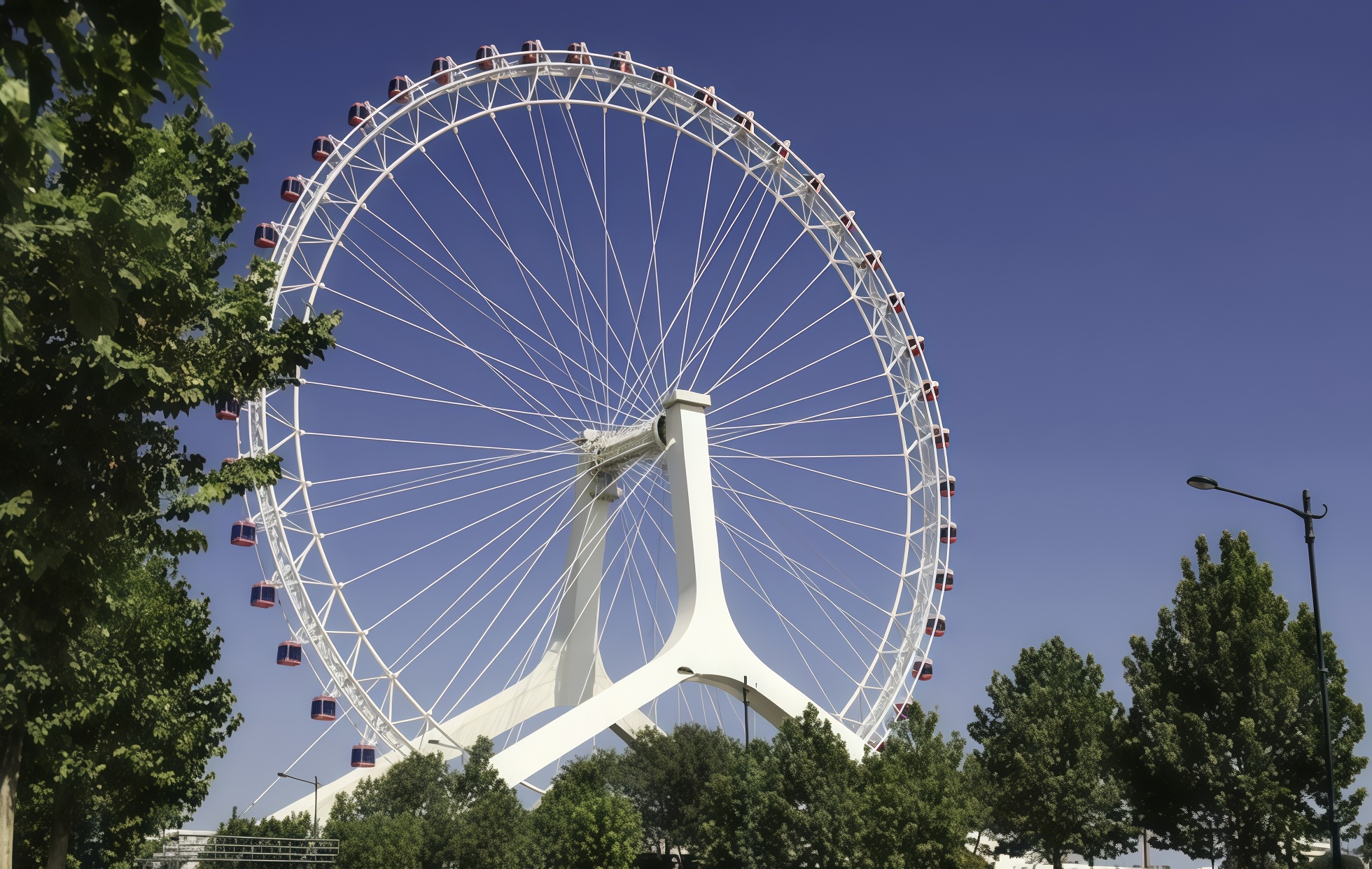
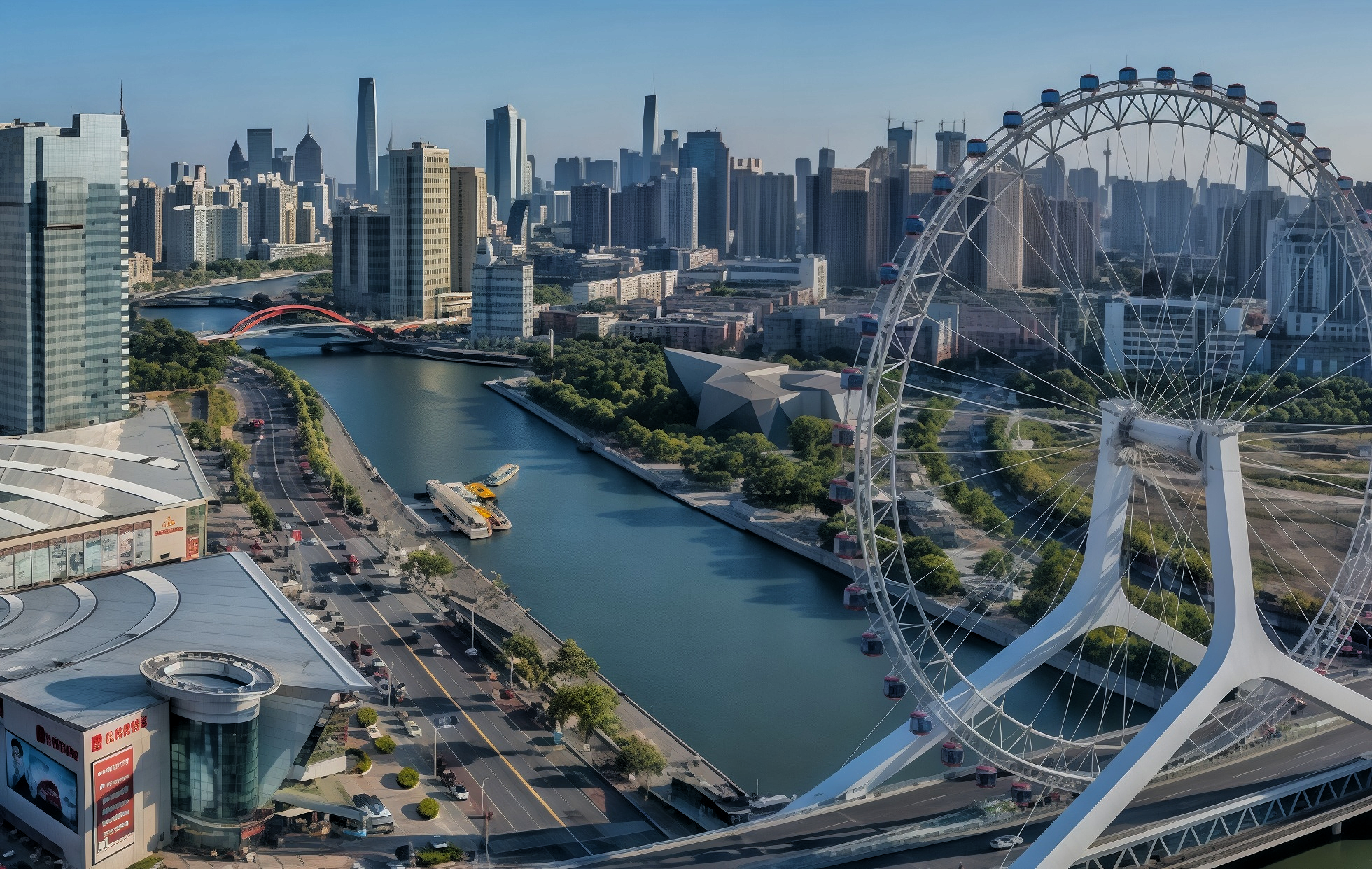
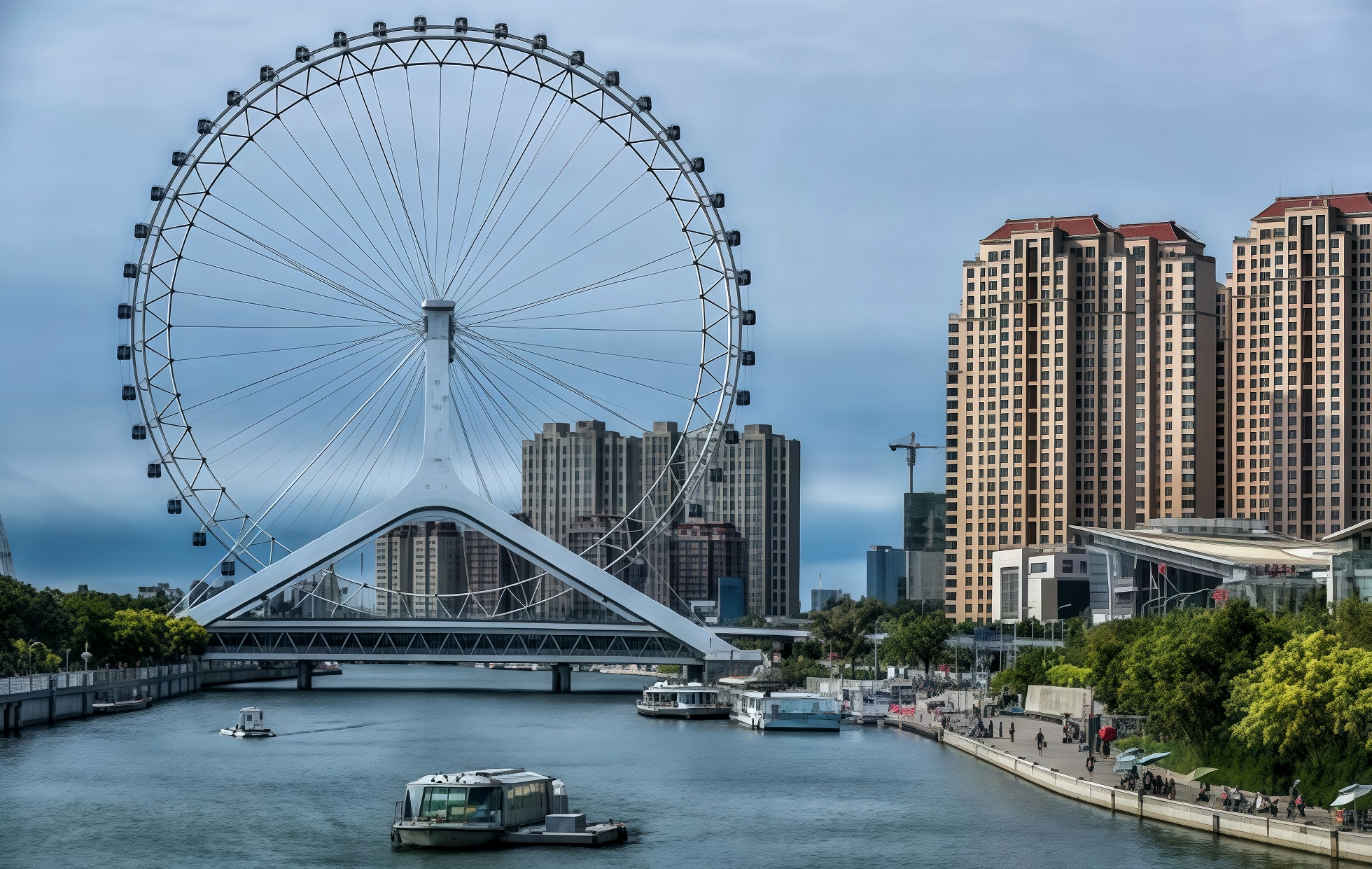
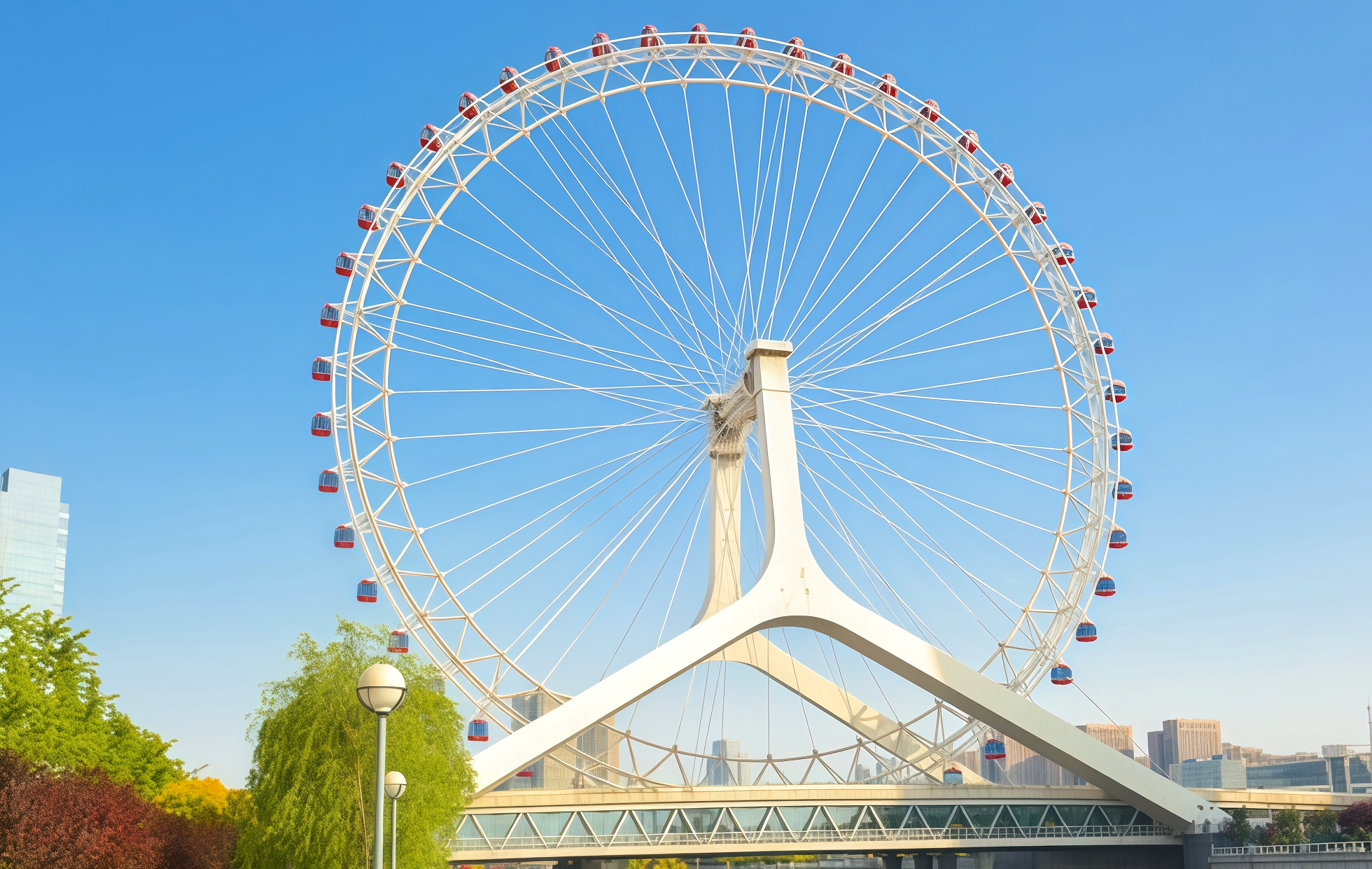
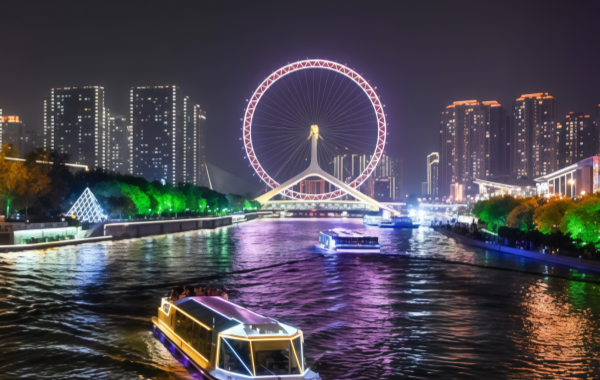
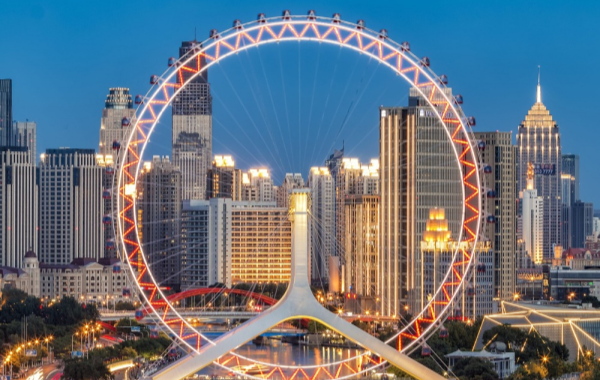
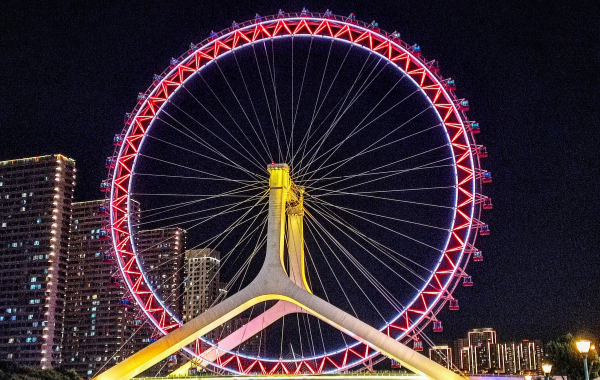
This is the defining characteristic of which the Tianjin Eye takes the greatest pride. The Ferris wheel is not built on a standalone ground foundation, but is instead mounted directly atop the Yongle Bridge, spanning the Haihe River to connect the Hebei and Hongqiao Districts. The bridge itself features a two-tier structure: the upper level serves as a roadway for motor vehicles, while the lower level houses pedestrian walkways and commercial facilities, with the Ferris wheel rising majestically from the very center of the bridge structure. This design—featuring a Ferris wheel built directly atop a bridge—represents not only a major breakthrough in the global history of Ferris wheel construction but has also become a symbol of Tianjin’s urban spirit of "openness and innovation."
The Ferris Wheel Structure: Decoding the "Eye of the Sky"
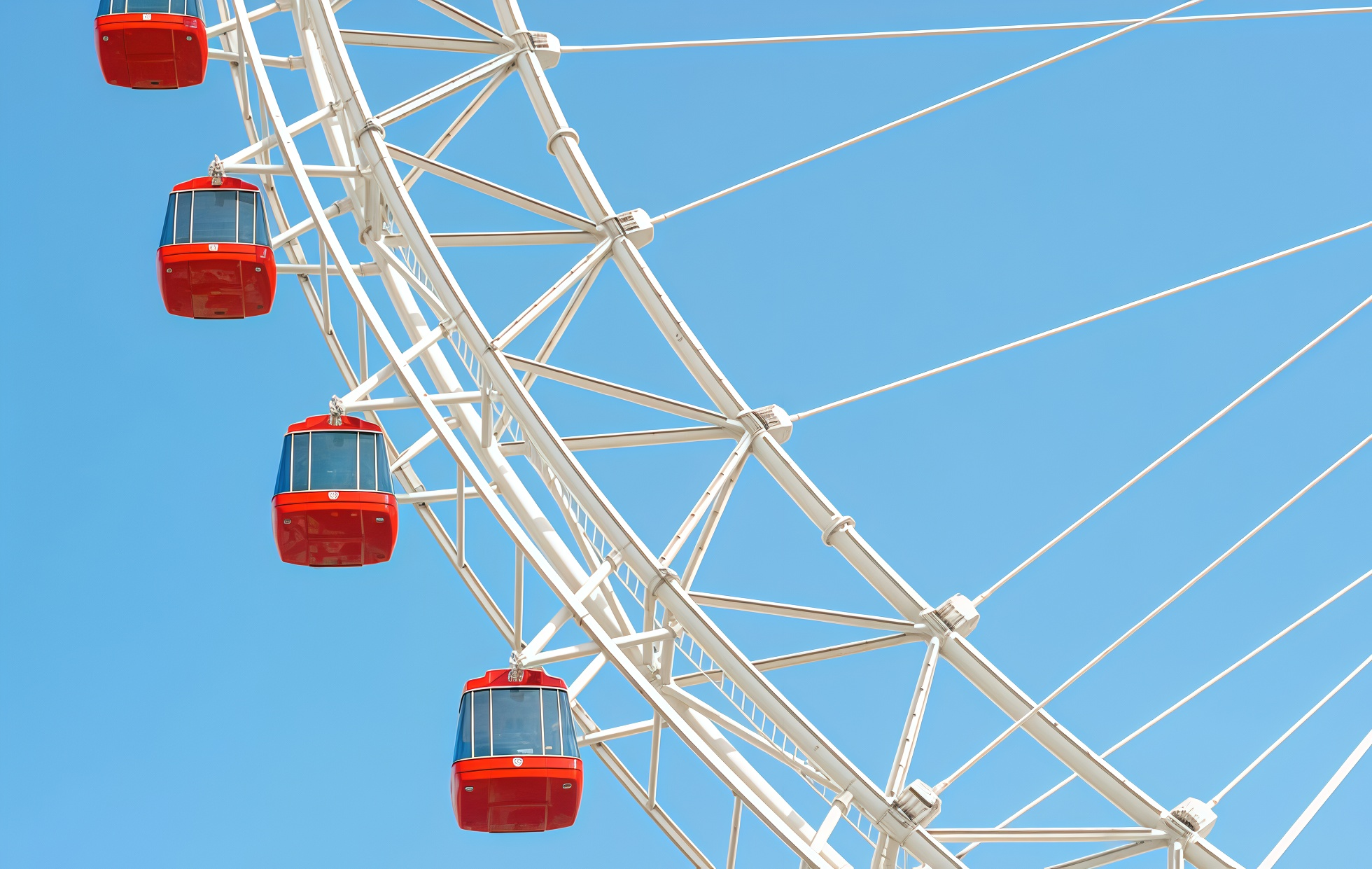
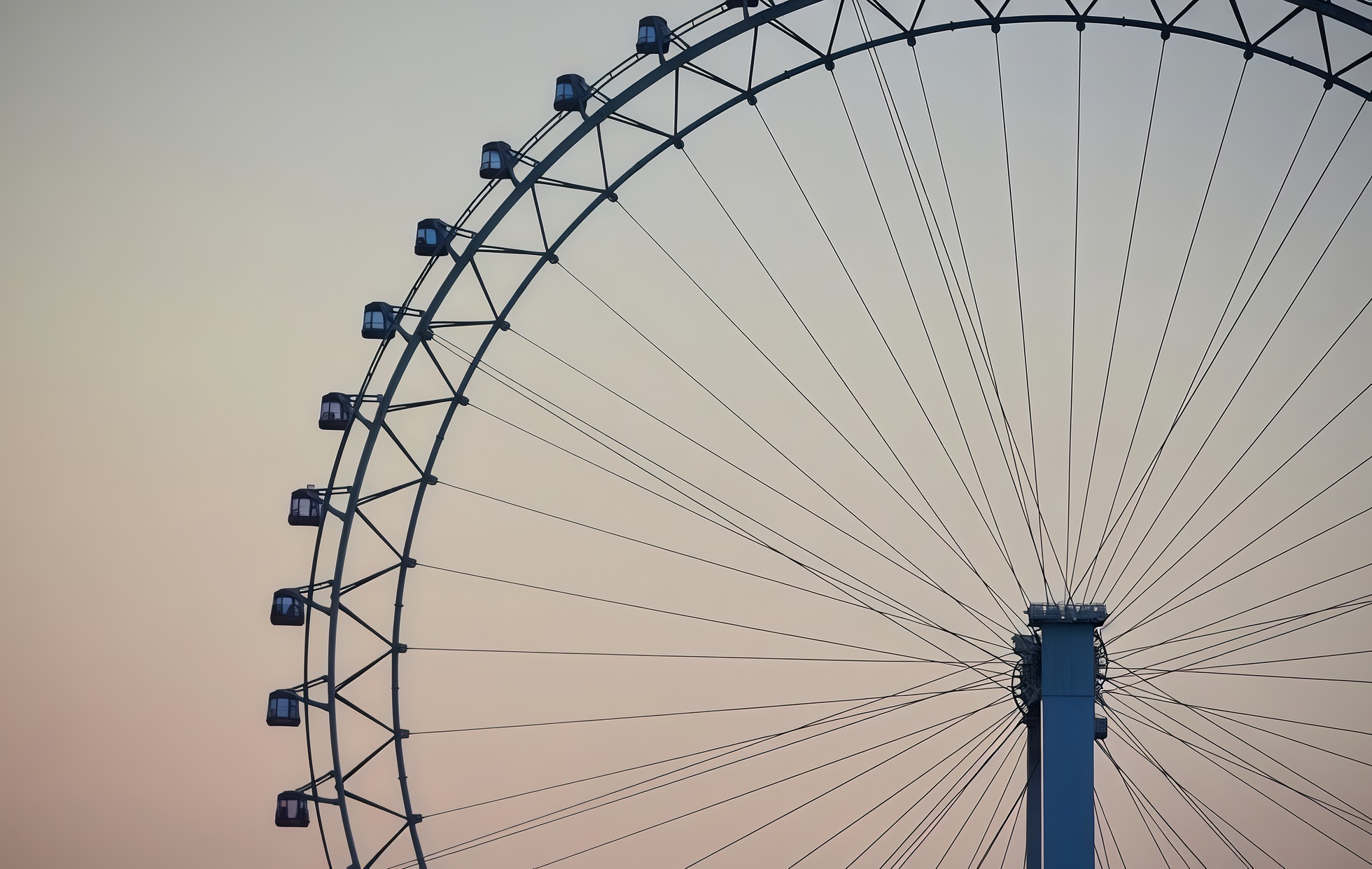
- Dimensions: The Ferris wheel boasts a diameter of 110 meters, reaching a pinnacle height of 119.8 meters (approximately the height of a 35-story building). Suspended from its outer rim are 48 fully transparent, 360-degree observation cabins.
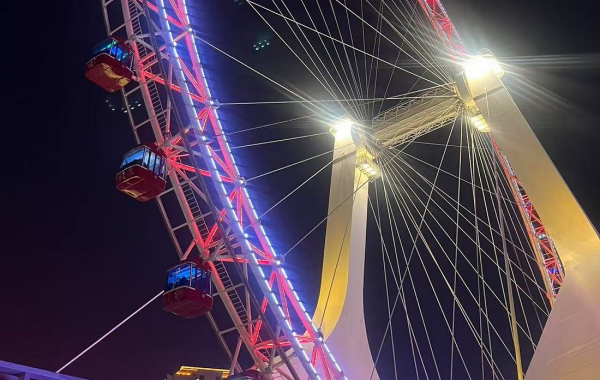
- Cabin Configuration: Each cabin accommodates up to 8 passengers, allowing the attraction to host 384 sightseers simultaneously. The new cabins are constructed from lightweight aluminum and feature interiors equipped with plush seating, ceiling and floor display screens, Bluetooth audio systems, charging ports, and other amenities, offering four distinct thematic experiences: "Immersion," "Intelligence," "Joy," and "Fun."
- Operational Rhythm: Electrically powered, the Ferris wheel rotates at a steady, uniform speed, completing a full revolution in approximately 28 to 30 minutes. Its smooth, unhurried motion ensures passengers have ample time to savor the scenery unfolding outside their windows.
Photography Guide: The Ultimate Guide to the Best Vantage Points
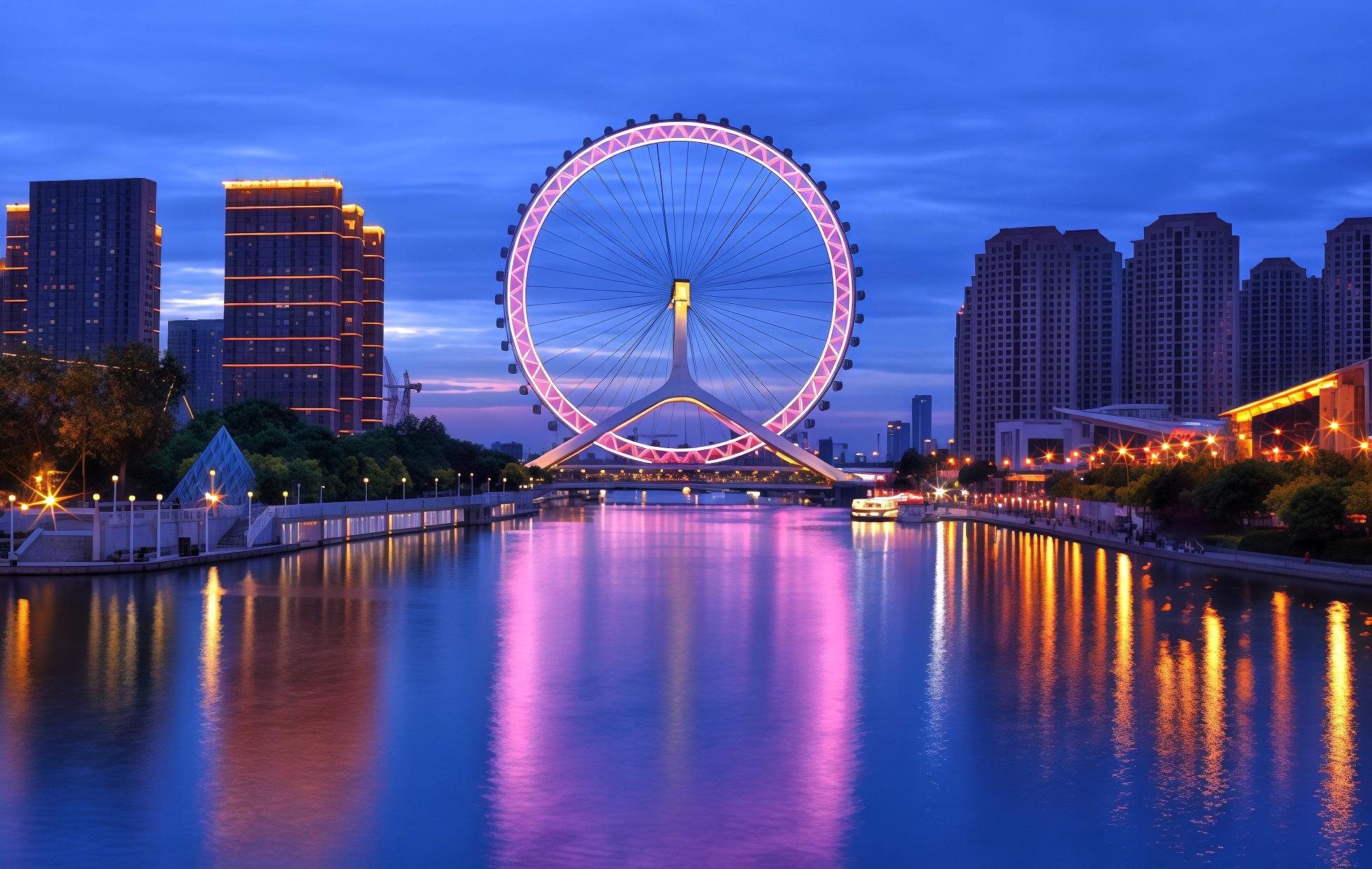
- Jingang Bridge (Top Recommendation): Located approximately 600 meters southeast of the Ferris wheel, this spot allows you to capture a panoramic view encompassing the entire wheel, its reflection in the Hai River, and the architecture lining both banks. When the lights illuminate at night, the Ferris wheel and its shimmering reflection create a captivating interplay of light and water—making every casual snapshot look like a professional masterpiece.
- Upper Deck of Yongle Bridge: Offers a close-up perspective of the Ferris wheel's structural framework, allowing you to capture the geometric beauty of its steel cables and observation cabins.
- Hai River Cruise Boat: By taking a boat tour, you can shoot from a low-angle perspective on the water, framing the Ferris wheel alongside the Jiefang Bridge and Jinwan Plaza for a truly unique visual angle.
- Drone Aerial Photography: (Flight permitted; subject to local regulations) Allows you to capture a bird's-eye view of the Ferris wheel and the distinctive "S-shaped" bend of the Hai River—offering an epic, god-like perspective from the sky.
A Cultural Landmark: A "Readable" Urban Landscape
The Tianjin Eye is far more than just a Ferris wheel; it serves as a "readable text" of the city—a living landmark that encapsulates and conveys the six-hundred-year history of Tianjin.
The Light Show: A Tech-Powered Visual Symphony
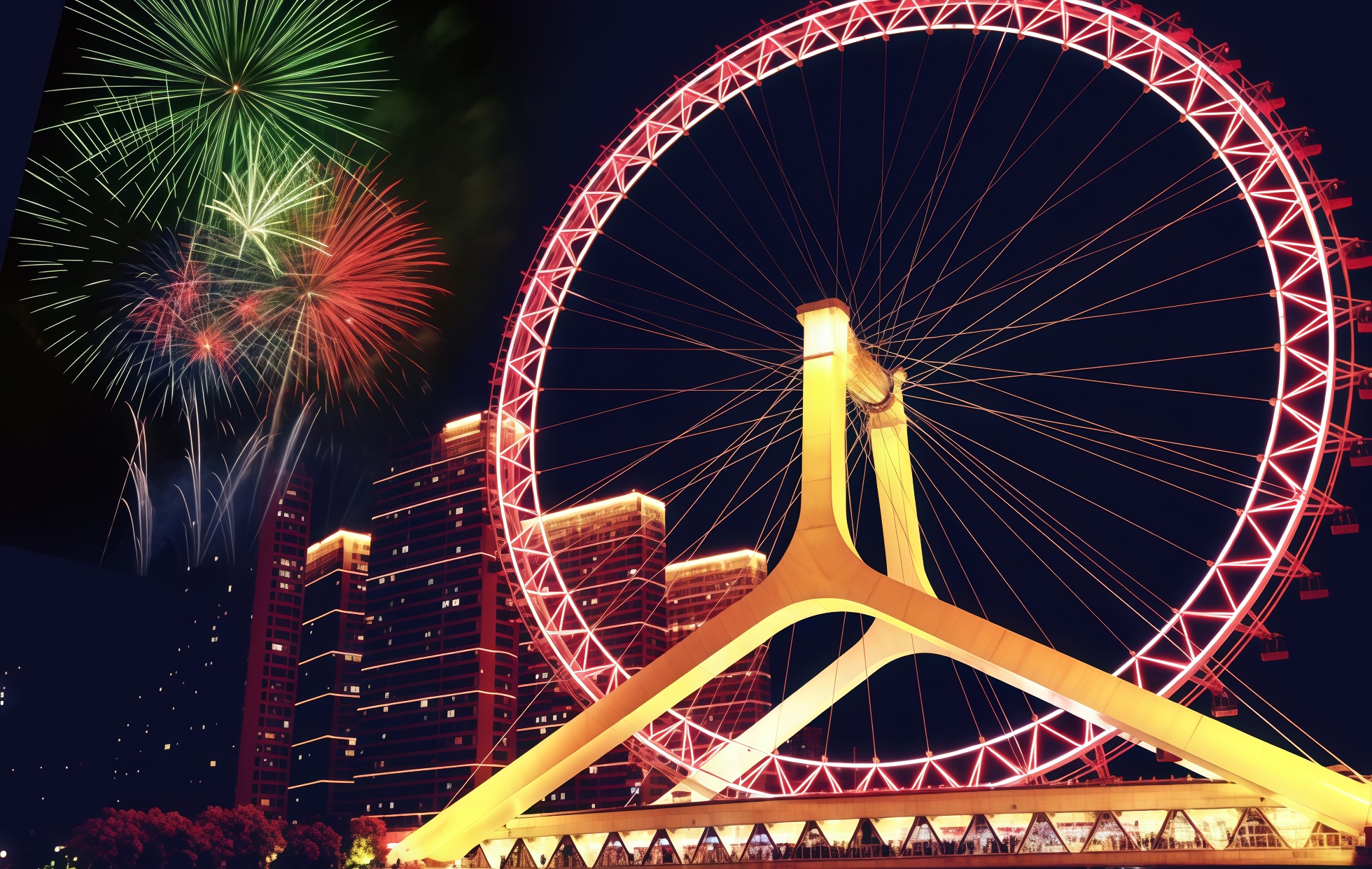
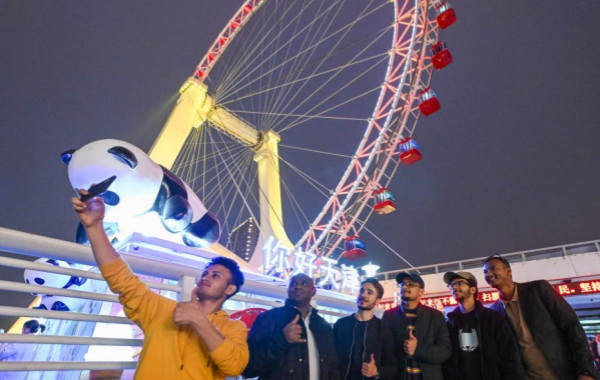
In 2025, the Tianjin Eye completed a major lighting upgrade project, becoming the world's first Ferris wheel to feature projections powered by laser performance systems. Three light shows take place nightly (at 20:00, 21:00, and 22:00), each lasting 3 minutes and 50 seconds. Themed "Spring Awakens Tianjin: A Rebirth of All Things," the spectacle is divided into three acts:
- Act I: The Thaw — Cool-toned blue and white gradient lighting simulates melting ice and flowing water, capturing the vitality of winter giving way to spring.
- Act II: Blossoms in Full Bloom — Animations of pink and gold petals burst into bloom across the Ferris wheel's structure, interspersed with silhouettes of birds taking flight.
- Act III: Setting Sail — Images of cruise ships and rippling waves are projected onto the wheel, while the motto "Struggle Creates Happiness" lights up the night sky.
The Haihe Riverfront: A Natural Stage for the Public
The banks of the Haihe River, situated at the foot of the Ferris wheel, have evolved into a spontaneous cultural stage for the citizens of Tianjin. As evening falls, the riverside platforms and spaces beneath the bridges come alive with a diverse array of performances: folk singers strumming their guitars, amateur opera enthusiasts taking the spotlight, and groups of square dancers swaying to the rhythm. The stone steps serve as natural tiered seating for the audience—reminiscent of a series of intimate open-air concerts—creating a unique and vibrant scene of authentic urban life along the Haihe River.
Surrounding Cultural Landmarks
- Ancient Culture Street (10-minute walk): A hub for Tianjin's time-honored brands and traditional crafts. Here, you can enjoy a one-stop experience of local folklore—from the exquisite clay figurines of "Clay Figure Zhang" and the traditional New Year woodblock prints of Yangliuqing, to the famous Erduoyan fried rice cakes.
- Dabei Zen Temple (5-minute walk): Tianjin's largest Buddhist monastery. The vegetarian meals and steamed buns served within the temple grounds are well worth a taste, while the adjacent "Pigeon Square" makes for a delightful photo spot and family-friendly outing.
- Italian Style District (10-minute drive): Featuring a cluster of European-style architecture and historic century-old streets. It is the perfect setting for capturing vintage-style photos during the day, and for enjoying a relaxing drink or two in the evening.
- Sancha River Junction (Three-River Confluence): The convergence point of the Haihe River, the Southern Grand Canal, and the Northern Grand Canal. As the birthplace of Tianjin, this site is also home to the monument commemorating the "Luan River Diversion Project" (which brought water from the Luan River to Tianjin).